What we inherit, what we renew
The Psalms have been translated, sung, performed and reimagined by countless people across different cultures and centuries, with each generation discovering something new. We ask artist, potter and author, Edmund de Waal why the Psalms continue to challenge and inspire him, and how we can make something we didn’t create meaningful to us.
What is it about the Psalms that has stayedwith you since childhood?
The Psalms were foundational in my early life. They were part of the almost daily experience of being in and out of churches and hearing them spoken, recited, and sung. They were being collectively animated; people were making them come alive.
And as I grew up, they began to have more significance for me and became part of my academic life at university.
But they had a very significant personal shift too. I spent a long time travelling and researching, trying to work out my complicated cultural heritage from having a father who’s both Jewish and Christian. It ended up with me writing a book about my own upbringing – a sort of hidden history of my Jewish family. The Psalms took on a different significance then, becoming a bridge point to understand this complicated and quite unsteady relationship around faith.
Have they continued to change in meaning for you?
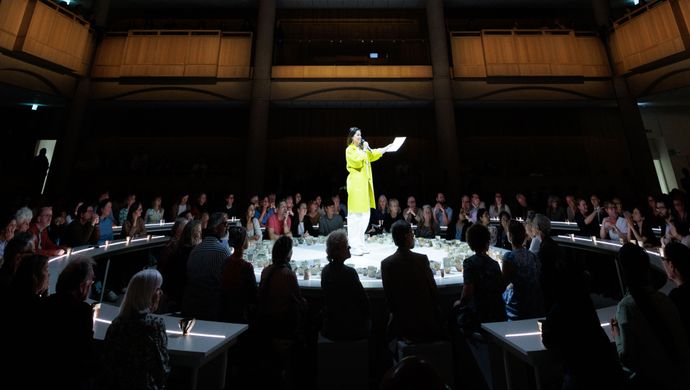
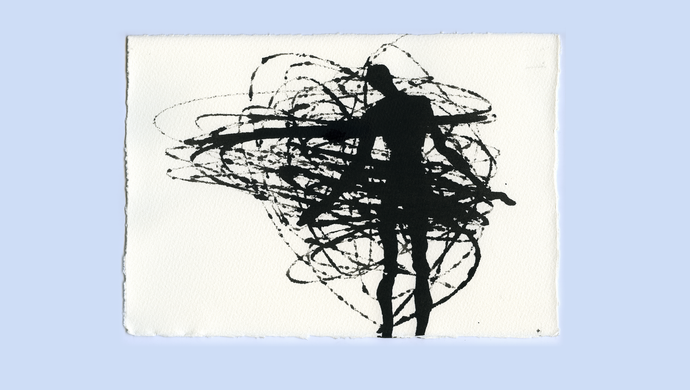
Very much so. I’ve worked on some very significant creative projects to try and explore what they mean in public, and one of those was working with choreographer Wayne McGregor on the staging of the Chichester Psalms by Bernstein at London’s Royal Opera House. Another was a huge project at the Venice Biennale in the historic Venice Ghetto, which began with a library of exile holding nearly 2,000 books in translation, written by exiled writers.
Over the last 10 years, the Psalms have taken on this very powerful creative significance for me as a vehicle to explore exile and displacement.
Why do you think some words stay with us when everything around us changes?
Some phrases are used at times of real vulnerability in our lives, and they have impact because they are repeated. At a funeral, for example, they take you back to other bereavements or moments of loss, and so they track points in your life, both very positive and very difficult moments. They can be the moments where you have been most alone and most together with people – moments of intense vulnerability or searching out into the world.
It’s also very significant that listening or being with other people while poetry or music or dance is happening stays with you for much longer than if you experience it by yourself.
Why do we keep returning to old stories and ideas instead of creating something completely new?
Very new things happen unexpectedly, and we can’t legislate for where they’re going to happen. What you can do is return to extraordinary, deep, and powerful cultural and symbolic roots, and see what they’ve given us over the generations, and you can find new and wonderful, flourishing creativity.
Never underestimate what it is to return to some of these great poems and songs, expressions of lament and of praise and of solace, because they renew us.
And do you think something can belong to us even if we didn’t create it?
It’s very difficult and dangerous to generalise around inheritance. So many people have enormous difficulty and pain around the silences in their own background or the places they’ve come from, or what they have lost.
If you can make a space where people want to share what they’ve brought with them then you have created a space which is really special.
The Day of Psalms is about opportunities to pass things on. Some people will be reinterpreting the Psalms and passing them back into the world. Others, such as this extraordinary community called Exiled Writers Ink, are bringing their own stories and poetry and giving them back. We’re using Psalms as a vehicle to explore displacement.
Why is it particularly timely to hold a Day of Psalms now, in such unsettled times?
The policing of boundaries is so intense at the moment; people are on the barricades saying this is where we stand against this, against that. This is profoundly an interfaith cross-community exploration of what we might believe, what we might care about. It’s always a good moment to explore that, but right now, my goodness, it is hugely significant.
In a very profound way, it’s very celebratory. A sharing of words and beliefs and sound and music and movement. How risky and how wonderful is that? You have to take a risk to become vulnerable in order for anything creative to happen.
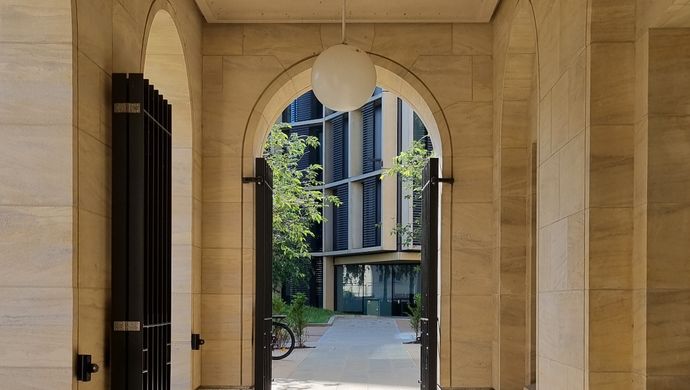
Day of Psalms is a day-long immersion in the Psalms as texts of exile, faith and shared human experience, spanning music, poetry, spoken word, visual art and craft. Curated by Cultural Fellow Edmund de Waal, the day will include free and ticketed activities and pop-up performances, including the Colin Currie Group performing Steve Reich’s Tehillim, followed by Aurora Orchestra performing Bernstein’s Chichester Psalms with the BBC Singers. It takes place from dawn to dusk at the Schwarzman Centre on 28 November, 2026.