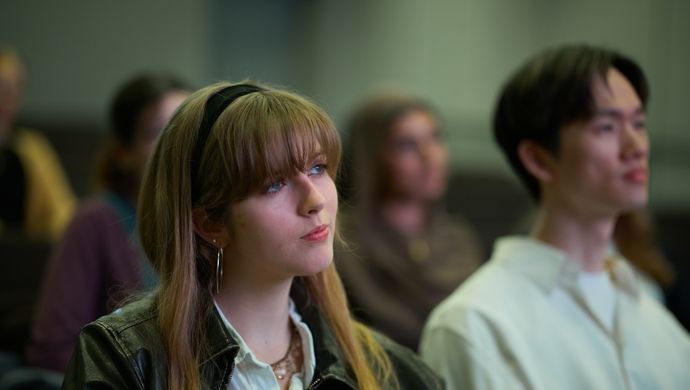
In concert: how shared wonder opens our minds
How can a collective moment of attention expand our imagination and help us to better understand each other? Naomi Waltham-Smith, Professor of Music, University of Oxford explains…
Listening to a piece of music, beholding a painting, watching dance, or even gazing at the sun setting can move the imagination along unanticipated and freewheeling paths. Like our dreams, such imaginings are often seen as private affairs, the secret gardens of our inner lives.
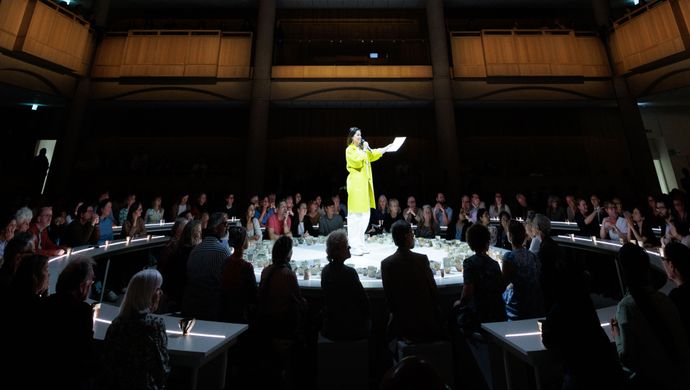
But when we attend a performance or visit a gallery or beauty spot with others, there is often a desire or expectation to communicate our aesthetic experiences. And if such experiences can unleash our minds to think beyond what currently exists or what is practicable, sharing them has a demonstrable social benefit.
In such situations, we often reach for the language of criticism, making judgements about quality, observing technical prowess, or demonstrating our cultural or historical knowledge. I might, for example, reflect on the formal experimentation in a performance, praise the technical execution of a movement, or point out the reference to another artist’s earlier work.
Yet jointly attending to art or natural beauty can bring us together as more than critics demonstrating our fluency with pre-made cultural scripts or the refinement of our taste.
There’s a long history of arts-based civic dialogue because it can engage us in more interactive, collaborative, and open-ended interactions with others rather than rational deliberation.
If we can disclose to one another the more inchoate, unscripted, and perhaps even fantastical thoughts that aesthetic experiences stimulate, we may come to appreciate and be curious about others in richer ways, not just in the image they present to the outside world but also in the more obscure imaginative worlds they inhabit. This can help to avoid reinforcing dominant ways of valuing people and experiences that risk entrenching stereotypes, conformity of taste, and inequality in cultural participation.
“Shared aesthetic experiences amplify the sense of curiosity and wonder that art and natural beauty inspire…”
The philosopher Iris Murdoch argued that joint acts of aesthetic attention, in allowing us to become sensitive to one another’s sensibilities, enable us to learn about the other’s moral or ethical vision of the world: what they notice, dwell on, and value in it. In moments of listening or watching with others, we may begin to wonder what they make of it and what is going through their minds. Moreover, as we come to understand or even imagine how they respond differently to the same aesthetic stimulus, our own judgement and worldview can come to see more strange and less self-evident.
Shared aesthetic experiences, in other words, amplify the sense of curiosity and wonder that art and natural beauty inspire, and they bring our vivid imaginative life out of its shell into our relationships with others.
It is for this reason that access to art and natural beauty cannot simply be an individualised affair that nurtures the imagination in isolation. It requires cultural spaces that provide occasions for shared aesthetic attention, where expanding our imagination and seeing the world afresh become collective projects with people from different backgrounds and walks of life.
Public spaces – from the youth centre music booth through community theatres to publicly accessible squares, gardens, and riverbanks – make our society more cohesive and trusting, not so much because they promote empathy but because they stretch the repertoires of our feelings and perceptions.
In a world where global challenges call for more collective imagination, these spaces shake us out of uncritical and dogmatic ways of being that close us off from others, instead equipping us with more elastic visions of what is possible and what is valuable.