‘I am not Nora’ – Who owns a life?
What if someone else told your story – and got it wrong?
From a family story, retold and misremembered, to a photo shared online without context, to an algorithm deciding which version of a person gets shown, and to whom, which is the definitive version of a story?
It is a struggle Dano-Norwegian writer Laura Kieler fought for more than fifty years. She was the real-life model for protagonist Nora in Henrik Ibsen’s famous play, A Doll’s House, which famously ends with her leaving her husband and children in search of personal growth. He based the story on a traumatic series of events in Kieler’s life, which included her admission to an asylum. Having her private life portrayed on the stage brought Kieler a notoriety from which she never escaped.
Kirsten Shepherd, Professor of English and Theatre Studies and leading Ibsen expert, and Tzen Sam, DPhil candidate and research assistant, have collaborated with Breach Theatre to devise a new play, Burning Down the House, that tells Kieler’s side of the story.
As Sam says, “Ultimately, Ibsen told the world a story about Kieler that sold, which also made him wildly famous. For decades, it was his version of Kieler’s story which audiences remembered.”
Kieler spent the rest of her long life insisting that Ibsen had never grasped her character, her personality – the things that made her ‘her’. She was still saying it in her eighties: ‘I am not Nora’. “She wanted the world to know,” says Shepherd. Kieler’s fight to be believed is reflective of a debate which has arguably even greater relevance in today’s digital age.
As Shepherd asks, “Who should have the right to control the narrative of a life? These are not new questions, but we are seeing new forms because we are in an age of social media, where appropriation and consent are hot topics.” Burning Down the House tackles these perennial questions.
As Sam puts it, Ibsen had turned Kieler into little more than “a footnote in his studies” for well over a hundred years. She had given him the plot without ever agreeing to give him herself, and the character built from her life became more famous than she would ever be. It could either be perceived as theft on a grand scale, or the very reason Kieler is remembered at all.
That paradox is precisely where Burning Down the House sits. As Billy Barrett, director, says, “We’re often trying to find stories that speak to our present questions in an interesting and unexpected way.”
Sam adds, “In highlighting the real-life genesis of A Doll’s House, our research probes these questions: what does it mean to make art out of life, and what are the ethical responsibilities of the artist and storyteller?”
“You didn’t get me right,” is how Shepherd sums up Kieler’s grievance. She adds, “it’s not what happens so much as, can you capture that essence?”
But Shepherd also sounds a cautionary note: telling your own story doesn’t make you its most reliable narrator. “We know from neuroscience that we have flawed memories; as we age, we come up with different versions of the past, without perhaps even knowing it.” She adds, “The idea that if I tell my own story, I’m somehow authoritative is problematic because I’m biased.”
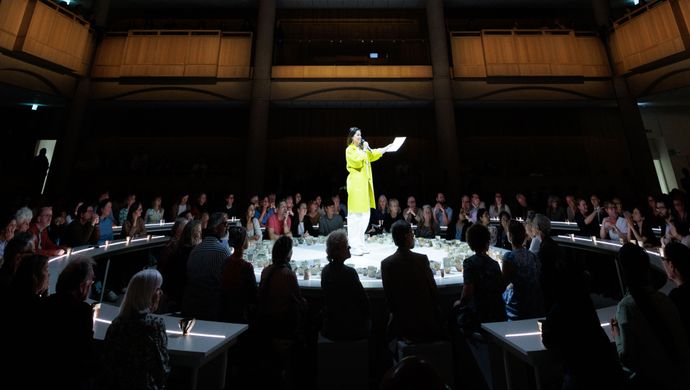
In Burning Down the House, Laura directly addresses the audience using text adapted from her own articles and memoirs: “There’s that enjoyable trope of an unreliable narrator,” says Barrett. “The audience might start to doubt her motivations at some point.”
Ibsen’s story about Kieler proved popular, but Sam says the real events of Kieler’s life comprised “a much messier, more tragic, and less commercial account.” Sam’s work, she says, “is really about the gap that can exist between the stories that sell and the complex reality of actual lives.” It is a gap that hasn’t closed since Kieler started shouting to be heard; it is simply played out on other platforms.
Translated texts add another layer of complexity to how reliable a story is and who gets to tell it. As Gaye Kynoch, who translated A Doll’s House and Kieler’s response, her play Men of Honour, as part of the Breach collaboration, says, “It’s all about giving the actors and the director as much to work with as the playwright gave them in the original.”
For Kynoch, the challenge of telling Kieler’s story was more physical than theoretical. “Working in the archive, holding letters that Laura Kieler had written or received felt quite intrusive; these were not the stories that she’d necessarily thought might be published.” Yet it is an undeniable and crucial part of her story.
As theatre director, Barrett had creative freedom: “We had to figure out how much to divert from the truth in the name of drama.” But he has deliberately avoided a tidy ending. “Any good piece of theatre will raise more questions than it answers, and we wanted to resist that easy ‘victim narrative’.”
The ambiguity of who owns your story can be incredibly valuable, something art embraces. As Barrett says, “What theatre at its best can do is to really slowly, and in a very human way, think through a question and share it with a live audience to consider. And there’s something about just being in that space to mull over some questions together that I think feels so important right now.”
It’s worth asking the same question of your own story, whether misremembered, mistagged, or misunderstood: who else is telling it, and are you comfortable letting them?
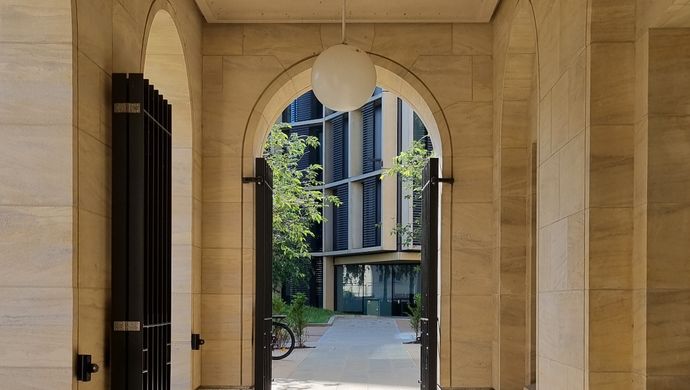
Burning Down the House is a new production by Breach, and emerges from the research of leading Ibsen expert Kirsten Shepherd, Professor of English and Theatre Studies at Oxford University. Showing at the Schwarzman Centre from 25 September – 10 October 2026.