The Human Factor
The future belongs not only to those building new technologies, but also to those who understand the people, cultures, and stories that give them meaning…
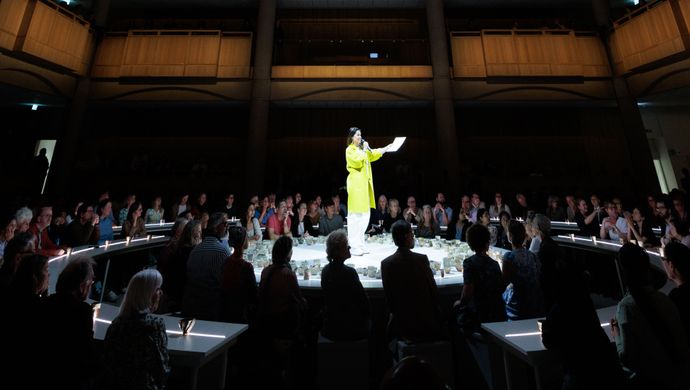
Dr Rajendra Chitnis, Associate Professor of Czech and Slovak at the University of Oxford, has taught the 1921 Karel Čapek play R.U.R. for two decades. In July his students finally saw a modern adaptation of it performed in the Schwarzman Centre’s Theatre.
Before curtain-up, Dr Chitnis explained to the audience why the play mattered beyond the stage: it gave us the word ‘robot’, derived from the Czech ‘robota’, meaning forced labour. The word has outlived the text by a century, while R.U.R.’s characters became the template for androids in modern film, TV and literature, from Blade Runner to Doctor Who.
Creative industries sit formally within the government’s industrial strategy, one of eight priority sectors alongside advanced manufacturing and life sciences. But a high proportion of funding in the sector is invested within technology, overlooking the content and skills that underpin the success of the industry.
The government has this year announced £500 million for R&D in the creative industries, weighted towards areas such as CGI, hardware and digital marketplaces.
“The intrinsic value of humanities disciplines in creative and cultural industries can often be missed, but the work going on within the Schwarzman Centre is highlighting just how important it is,”
“Now we have the infrastructure, in our facilities and spaces, to bring this connection to life.”
Alexandra Vincent, Chief Executive Officer of the Schwarzman Centre.
Creative industries sit formally within the government’s industrial strategy, one of eight priority sectors alongside advanced manufacturing and life sciences. But a high proportion of funding in the sector is invested within technology, overlooking the content and skills that underpin the success of the industry.
The government has this year announced £500 million for R&D in the creative industries, weighted towards areas such as CGI, hardware and digital marketplaces.
“None of these sectors can thrive unless you’ve actually got quality, compelling content,” says Vincent. “The content, and the skills needed to develop that content, are what provides the human, emotional connection and builds the experiences and products that result in economic growth.”
Chris Michaels, a consultant with Human Economics and Deputy Chair of English Heritage, helped build the Treasury case for CoSTAR, the national network of creative R&D infrastructure. He voices the same concern.
“The study of architecture is one of the best ways of understanding what mattered to people.”
Chris Michaels, a consultant with Human Economics and Deputy Chair of English Heritage.
This is already apparent. US giant Universal Studios is due to open a multi-billion-pound theme park in Bedfordshire in 2031, while French company Puy de Fou has applied to open a £300m attraction in Oxfordshire. “Places of consumption tend to offer a more immediately legible investment proposition,” says Michaels. “A large attraction gives you a visible building, visitor numbers, tourism spending.”
But without the content, the stories, the music, and the skills to create them, there would be no experiences to consume in these places.
“There has always been the need for infrastructure within the arts and humanities,” says Vincent. “We just probably haven’t called it infrastructure.” From concert halls and language labs to archives and libraries, spaces to create are critical.
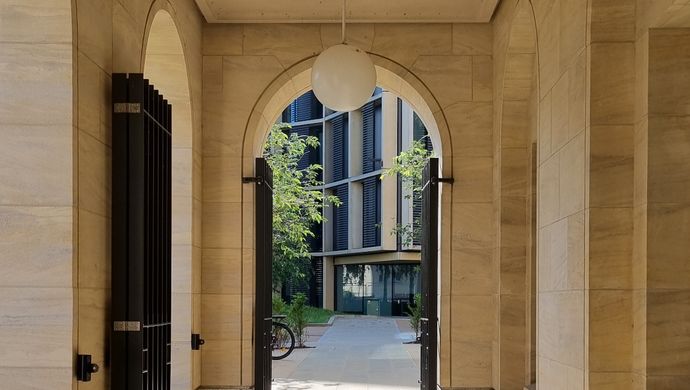
But many of the practitioners within the creative and cultural industries operate in micro-enterprises that would not normally have the resources to access such infrastructure. The Schwarzman Centre for the Humanities is providing this essential infrastructure to bring together academics, students, and creatives enabling new collaborations and development of new skills.
For Vincent, the case for investment reaches well beyond libraries and performance venues. “It’s about how we can bring human elements into our world, our day-to-day lives; how do we make a difference as humans and how can we make sense of and live in this complex world?”
“That’s really important when we think about what it is really tangible about being human, in a world of machines,”
Alexandra Vincent, Chief Executive Officer of the Schwarzman Centre.
Indeed, the narrative travels far beyond the Schwarzman, reaching people who may never step over its threshold. “It might be that someone’s life is touched by a bit of research which has influenced government policy,” says Vincent.
Or as Michaels adds, “Many spillovers will be outcomes to which the Centre has contributed, rather than effects it has caused alone.”
The word for a machine with no soul was coined a century ago in a theatre near Prague, not in a lab. The investment in the Schwarzman Centre is an important signal to the crucial contributions of the Humanities, not only to understanding the world, but also to economic growth, prosperity, and wellbeing.