Oxford Sings: Carmina Burana
-
4 Jul 202617:30Schwarzman Centre, OxfordSohmen Concert Hall
Few pieces of classical music make an entrance quite like Carmina Burana.
From the thunderous opening of O Fortuna, a movement that’s become iconic in film, television, and popular culture, Carl Orff’s cantata grabs hold and doesn’t let go.
Based on medieval poems that celebrate the fortune, fate and unpredictability of life, Carmina Burana is both ancient and modern, and irresistibly theatrical. This performance with Merton College Choir, Oxford Bach Choir and Conductor Benjamin Nicholas features the version for two pianos and percussion, offering a fresh take on Orff’s powerful score.
This is music that captures life’s extremes: its pleasures, its chaos, and the ever-turning wheel of fortune.
Part of Oxford Sings, a day-long celebration of singing in its many forms.
Performers
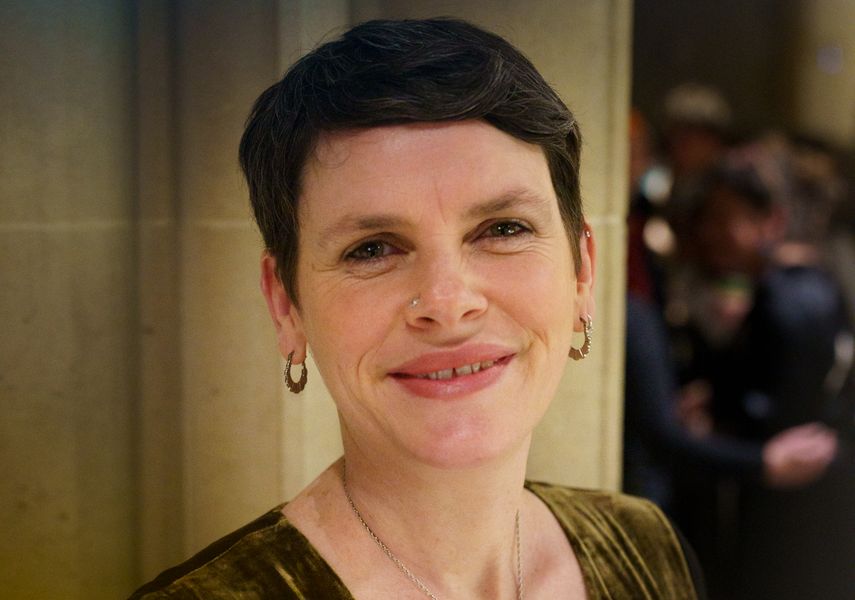
Emma Tring soprano
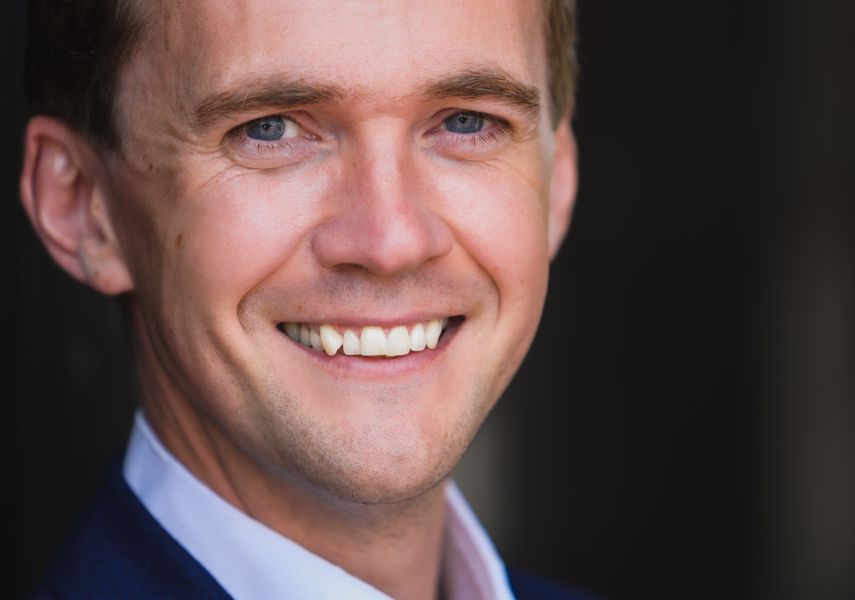
Simon Ponsford countertenor
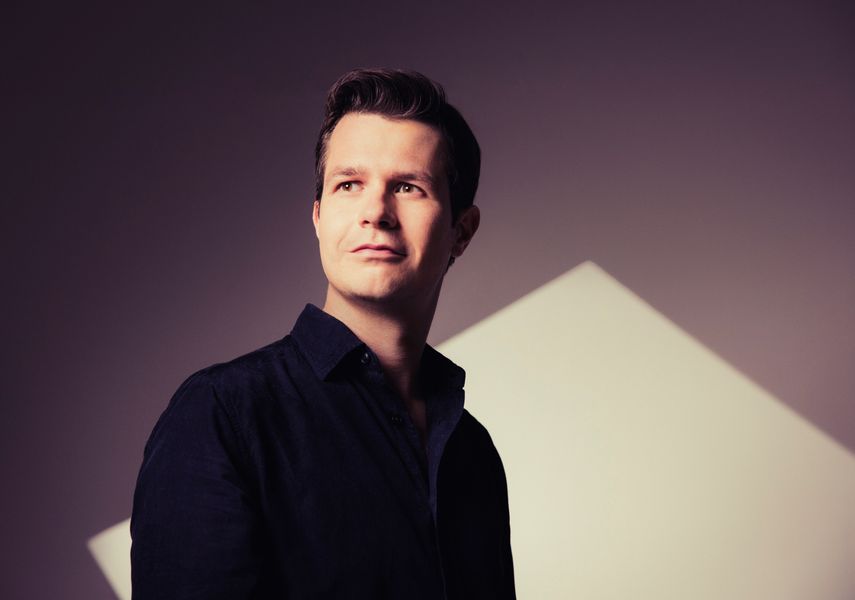
Florian Störtz bass
George English, Sacha L Johnson, Alistair Marshallsay, Engin Eskici, Cameron Gorman, Sehyogue Aulakh, Peadar Townsend percussion
Libby Burgess, Robert Quinney pianos
Merton College Choir
Oxford Bach Choir
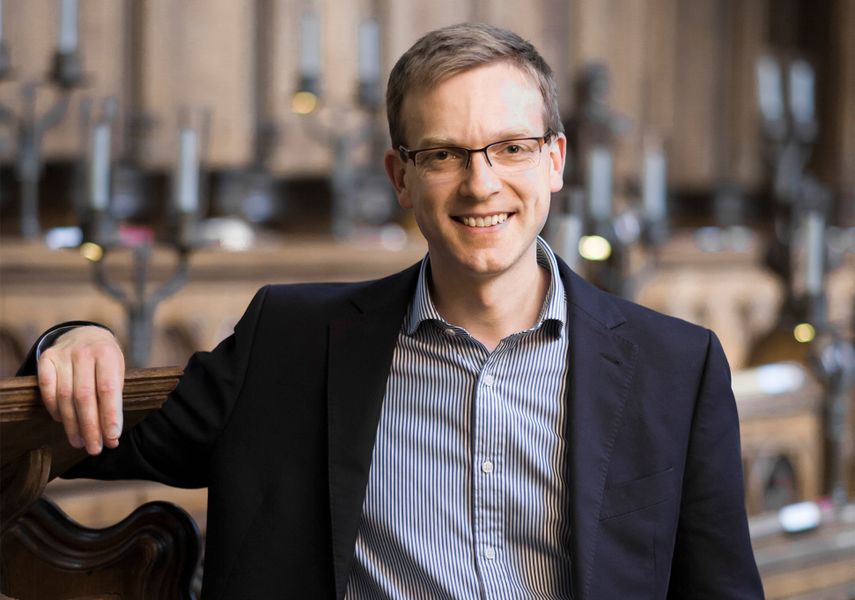
Benjamin Nicholas conductor
Repertoire
Carl Orff Carmina Burana
Carmina Burana
Carl Orff (1895-1982)
Carmina Burana has become one of the best-known pieces of 20th-century music, its popularity extending far beyond the concert hall into the field of television advertising and elsewhere. Its composer was born in Munich on 10 July 1895 into a prominent and wealthy military family. The young Orff grew up surrounded by regular music-making in his family and soon began to learn the piano. A visit to the opera at the age of 14 to see The Flying Dutchman triggered his lifelong passion for the theatre and, after graduating from the Munich Academy, he held a series of posts directing the music at theatres in Munich, Mannheim and Darmstadt before military service intervened. After the war, Orff became involved in teaching music in Munich and, in 1924, founded the Güntherschule there with Dorothee Günther, a dance teacher with extensive theatrical experience. This contributed to his interest in 'total theatre', the unity of speech, music and movement, which was to dominate his creative life. It also led to the educational method Schulwerk which Orff developed for teaching music to schoolchildren, forming a parallel with his work in the theatre. Based on the principle of creative improvisation, his methods have had a profound influence on the concepts of elementary music teaching all over the world. In the 1930s Orff produced stage adaptations of music by Bach and Monteverdi. His ideas were very much influenced by Classical Greek tragedy and Italian baroque musical theatre, as exemplified also in such pieces as Stravinsky's Oedipus Rex and Les Noces. This work culminated in the composition of Carmina Burana, which was the first in a trilogy of Latin works, later grouped together as Trionfi, the companion pieces being Catulli Carmina (1943) and Trionfo di Afrodite (1953).
Orff discovered the text for Carmina Burana in J.A. Schmeller's edition of an early 13th-century manuscript discovered in the Benedictine monastery of Benediktbeuern in southern Bavaria but thought possibly to have originated in the abbey at Seckau in Austria. The manuscript contains secular poetry, mostly in medieval Latin and German, dating from the 12th century, and it remains one of the most important sources for this kind of literature. The poems were written by the so-called goliards, wandering poet-musicians, mostly from scholarly or ecclesiastical backgrounds, who were active, mainly in Germany, France and England, from the 10th to the 13th centuries. Although they have something of a reputation for lechery, gluttony and debauchery, they were educated men who wrote their poems to be sung to an educated audience. They lived a mainly itinerant life and depended for their survival on their wits. The poems are mostly highly secular in nature, but they often have religious or moral themes, often savagely mocking or satirising the Church or the authorities, highlighting the frequently corrupt practices of the day. The manuscript abounds in love songs and poems extolling the virtues of eating, drinking and gambling.
Orff saw the potential of these colourful poems to become the basis of a vivid musical spectacle which would combine the racy medieval words with lively music and stage movement so made a selection of 25 of them, celebrating the pleasures of life, for this purpose. Ruling over the whole proceedings is Fortuna, the Imperatrix Mundi (Empress of the World), bemusing the world with her Wheel of Fortune. It is she who introduces the work and returns to close it at the end.
The first two movements form a prologue, describing life at the mercy of Fortuna, affected by her every whim, one moment lifted high and the next downtrodden. The Wheel of Fortune is portrayed by machine-like ostinato rhythms and repetitive musical ideas.
Part I comprises two sections, 'Spring' and 'In the Meadow'. The awakening of spring is depicted in lilting chant-like melodies (3). In Carmen 4, the baritone soloist describes how, at this time, men's thoughts turn to love. Carmen 5 is a progressively vigorous welcome to the season, bringing its challenge to lovers to be rivals of legendary Paris and Helen of Troy in their ardour. 'In the Meadow' begins with a lively orchestral dance (6) introducing a choral dance (7) where a girl laments the loss of last season's lover: ‘who will love me now?’ In no. 8 the girls flirt with the boys, singing an innocent strophic tune. Then (9) the girls become a little more eager, the melodies a little more beguiling. Part I ends with a cheeky dance (10) where the poet says he would give up everything to hold the Queen of England in his arms!
Part II is set 'In the Tavern' and represents a considerable change in mood. In no. 11, the poet describes a frightening picture of life out of control, ruled over by Venus, caring only for the moment with no thought for Eternity. The heat of this song carries over into the next movement (12), quite literally the 'swan-song' of a swan roasting over a spit, lamenting ironically while the dinner guests impatiently anticipate his demise. Here Orff makes the tenor soloist wail at the top of his range sempre ironico, each verse concluding with the chorus tenors and basses relishing the roasted bird. In the next movement (13) a corrupt abbot describes his debauched life and mourns his fate. The tavern scene ends with a defiant orgy of drinking and gambling for tenors and basses (14), making irreverent, mocking references to people in all walks of life.
Part III 'The Court of Love' is introduced with a short song (15) for children's chorus and soprano solo indicating the role of fate in love and the worst fate of all – to be without it. This and the next movement (16) portray two lovers kept apart by the conventions of Courtly Love, tortured and pining for each other. Carmen 17 sees the soprano solo, representing Venus, charming a young man into love, who then idolises his beloved to the exclusion of all else. The lover becomes more impatient with this idealised form of love and, by the third verse of no. 18, the baritone soloist and tenors and basses sing a lustful, groaning Latin melody in alternation with a chattering refrain for upper voices in old German. Carmen 19 is a short song for six-part men's voices fantasising on the ‘inexpressible pleasures’ of love. In no. 20 Orff increases the intensity of passion with jazzy rhythms and insistent ostinatos. Carmen 21 has the soprano soloist hesitating before submitting to her lover. The next movement (22) is a reminder of the lively dances of spring where the lover is at the height of his passion, involving full chorus, soprano and baritone soloists and children's choir. Carmen 23 is only four bars long and in it, the soprano soloist finally submits con abbandono. Carmen 24 is a grand chorale-like chorus, parodying a Christian hymn in words we might expect to refer to the Blessed Virgin Mary. Here, it is turned into a hymn in honour of the poet's idealised woman, who has yielded to his love and been brought to the height of perfection in his eyes. She is greater than Blanziflor (Blanchefleur or lily), the heroine of a medieval romance, famous for her fidelity and purity and, conversely, Helen of Troy, who deserted her husband and eloped with Paris, greater even than Venus herself. The Wheel of Fortune comes full circle and the work concludes with the return of the opening movement.
Orff's musical means are often quite simple. His melodies and harmonies are usually straightforwardly diatonic or modal in feel and he relies for much of his effect on driving 'motor-rhythms', ostinatos and elemental, dance-like music. The orchestral version is dominated by a large percussion section (which includes two pianos) and Orff sometimes writes for the chorus in a percussive way, an aspect that is perhaps emphasised in this version for two pianos. The words are divided between three soloists, a semi-chorus, main chorus and children's choir. Orff's original intention was that the music should be accompanied by mimed action on stage but the work can still produce an overwhelming effect without that extra dimension.
Carmina Burana was first produced by the Frankfurt Opera on 8 June 1937, conducted by Bertil Wetzelsberger, to great acclaim. Because this première took place in Nazi Germany, the piece, and Orff's career in the 1930s and 1940s, have been subjected to close scrutiny for possible fascist tendencies. However, recent study (in particular Composers of the Nazi Era by Michael Kater) has shown that matters were more complex than that. The racy libretto offended the Nazis' puritanical views on sex; the mixture of medieval Latin, old German, and old French was considered not German enough; the strong influence of Stravinsky on the work was deemed suspect; and Orff's own political opinions were not above suspicion. Indeed, although the Frankfurt première was a great success, there were hostile reviews in some Nazi journals, and other German opera companies – evidently concerned to avoid trouble, and to see which way the wind was blowing – were slow to take up the piece, but the music’s immediate appeal soon brought it widespread success within Germany. Since 1945 its popularity has spread round the world, although it did not receive its British première in Coventry until 1951 – followed a few weeks later by two performances at the Festival Hall, conducted by the German Jewish émigré Walter Goehr – and the US première, in San Francisco, was not until 1954.
Martin Holmes
The Oxford Bach Choir (OBC)

The Oxford Bach Choir (OBC) was founded in 1896 by Basil Harwood, then organist of Christ Church, to further the music of J.S. Bach in this city. In 1905, it merged with the Oxford Choral and Philharmonic Society, whose origins can be traced back to 1819, thus making the OBC the inheritor of a choral tradition in Oxford extending back two centuries.
The Choir has always maintained a close relationship with Bach’s music, and in 1903 it gave the first complete Oxford performance of his B Minor Mass. However, it has also aimed to provide singers and audiences with a wide range of choral music from the 17th century onwards.
It has also supported new music, giving almost 20 world premieres, including the first performance of Hubert Parry’s Songs of Farewell as a complete cycle (1919) and the orchestral version of William Walton’s The Twelve (1966), as well as early performances of works by composers such as Elgar, Holst, James MacMillan and Jonathan Dove. The Choir enjoyed a close relationship with Ralph Vaughan Williams, performing many of his works in his presence, and giving the premiere of his Sancta Civitas in 1926. Works that the Choir has commissioned include Nicholas Maw’s Hymnus, commissioned for the Choir’s centenary in 1996; Bob Chilcott’s Requiem, first performed in 2010; and To Spring, a setting of William Blake by Alissa Firsova, which was written for the Choir’s 125th anniversary year and performed in 2022.
The Choir regularly performs with professional soloists and leading orchestras, which have included the Royal Philharmonic Orchestra, the London Mozart Players, the English Chamber Orchestra, the Philharmonia and the City of Birmingham Symphony Orchestra. It has also worked with ensembles specialising in period performance, such as Florilegium and Instruments of Time & Truth. Florilegium joined the Choir in June 2019 to mark the 350th anniversary of the opening of Sheldonian Theatre with a special performance of Handel’s Athalia, a piece which Handel himself had premiered in the Sheldonian.
Among the Choir’s conductors have been Sir Hugh Allen, W.H. Harris, Sir Thomas Armstrong, Sydney Watson, Simon Preston, Christopher Robinson and Nicholas Cleobury. Benjamin Nicholas has been our music director and conductor since September 2018.
Illustrious alumni include Dorothy L Sayers, Margaret Thatcher, Sir Adrian Boult and Sir Edward Heath. Membership currently numbers about 150 auditioned singers who come from all walks of life and are drawn from the city, its surrounds and its universities.