A new vision of the future, built from the dreams of the past.
After Utopia reimagines more than a century of World’s Fairs — from the Eiffel Tower in Paris in 1889 to Expo 2025 in Osaka — transforming their most iconic architectures into a vast, algorithmically generated vision of a future that never quite arrived.
World’s Fairs were once places where humanity gathered to imagine tomorrow. They brought together architecture, technology, art, politics and culture, turning visions of progress into physical environments that millions of people could enter and experience.
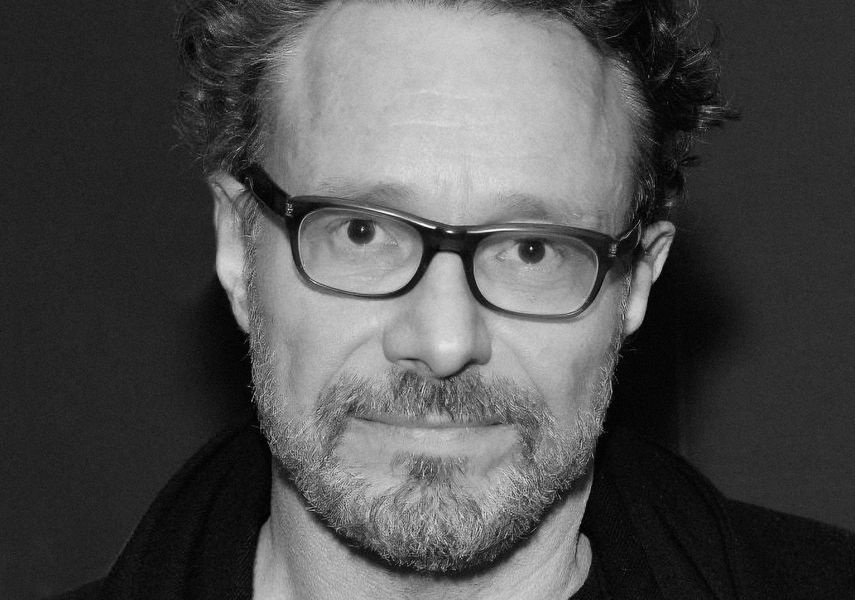
For Marco Brambilla, that promise of the future began with a childhood encounter with Expo 67 in Montreal.
Arriving from Milan, he encountered the remnants of Buckminster Fuller’s geodesic dome, futuristic pavilions and monorail — a city that seemed to have arrived from another time. That experience remained with him, and over the years he visited former Expo sites in Brussels, Osaka, Seville, Shanghai and New York.
These places were once stages for humanity’s most optimistic ideas about what the future could become. Their extraordinary structures — from the Eiffel Tower to the Atomium — embodied a belief that technology could transform society and deliver better living through technology.
For After Utopia, Brambilla treats these structures as time capsules.
Eighteen World Expositions, spanning 136 years, have been reconstructed through generative AI. From each Expo, Brambilla identified an emblematic pavilion and transformed it into a living, shifting architectural form.
The result is neither reconstruction nor nostalgia. It is a new digital landscape in which the architectures of different eras coexist.
Paris, Montreal, Brussels, Osaka, Seville and Shanghai collapse into a single temporal space. Geography and chronology disappear. Architecture becomes fluid, unstable and constantly transforming.
The installation takes the form of an ascent.
Three ultra-high-resolution vertical screens create the entrance to After Utopia’s electronic city. The central channel carries viewers through a continuous ascent across all eighteen Expositions, while the two side channels reveal intimate details of the transforming pavilions — structures seemingly altered by gravity, time and the logic of the digital world.
The city is inhabited by algorithmically generated human figures moving across a vast grid. Their numbers are not arbitrary: their density corresponds to the historical attendance of each Expo. Beneath the synthetic imagery is real human data — a record of the millions of people who once entered these visions of the future.
The work draws inspiration from the radical architectural visions of the 1970s, particularly Archigram and Superstudio.
Archigram’s Plug-In City imagined a city composed of interchangeable modules into which life could continually plug itself. Superstudio’s Continuous Monument proposed a limitless global grid that could extend across architecture and landscape.
After Utopia brings these ideas into the present: the grid becomes the world, while the pavilion becomes a constantly reconfigurable unit within it.
What once seemed like speculative architecture now feels strangely familiar. Invisible systems increasingly shape the spaces we inhabit, the images we see and the choices available to us.
In this sense, After Utopia asks whether utopia itself has migrated from physical space into the digital realm.
The World’s Fairs promised a future that technology would help us build. Today, technology is increasingly capable of imagining, constructing and even autonomously generating the environments around us.
If the nineteenth and twentieth centuries promised better living through technology, the twenty-first century confronts us with a more uncertain question:
Who gets to decide what that future looks like?
And, as artificial intelligence becomes an architect of experience itself, what happens to our own capacity to imagine?
After Utopia looks backwards in order to look forwards. It resurrects the futures once imagined by previous generations and places them inside the technologies of our own moment.
The result is a world suspended between memory and prediction — a digital utopia assembled from the fragments of futures that came before.
Perhaps the question is no longer whether the future will arrive.
Perhaps it is whether we will still be the ones imagining it.
Part of Utopia Now!, a season exploring the role of the arts in making a better future possible.
Utopian art and literature has always striven to build forms in which an unseen future comes into contact with the present, and with the past. The ‘Now’ in ‘Utopia Now’ names the threshold between the worlds that we have lived in, and an unkown world to come. The architectures in Marco Brambilla’s After Utopia occupy that threshold, giving an evanescent future fleeting, shifting shape. In refashioning the history of our utopian architectural projects in fragmentary digital forms, After Utopia captures the spirit of utopian seeing in our own digitally rendered time.
Professor Peter Boxall, Goldsmiths' Professor of English Literature, Oxford University