


Burning Down the House
A Breach Theatre and Schwarzman Centre Production

Written by Ellice Stevens and Billy Barrett
and devised by the cast
Directed by Billy Barrett
drawing on the research of Professor Kirsten Shepherd and Tzen Sam, and adapted from new translations by Gaye Kynoch

Welcome
Welcome to the Schwarzman Centre's new theatre, a home for theatre lovers of all kinds, and a place where artists, researchers and audiences come together to create and experience adventurous new work.
Working with a fantastic ensemble, we’ve been piecing the story of Laura and Ibsen’s fraught literary relationship - fleshing out moments and following clues in the documents uncovered and translated by our research partners. In doing so we’ve embarked on a process parallel to Ibsen’s - of transforming real life struggles into drama, with all of the ethical and creative complexities that come with that. We’ve found that this is a story that resists easy answers, or a simplistic villain and victim narrative - instead posing complex, knotty questions and presenting two fiercely intelligent, equally flawed adversaries.
Ellice Stevens and Billy Barrett
Breach Theatre
John Fulljames and Josie Bamford
Schwarzman Centre Cultural Programme
Key Information
Age Guidance: Recommended 14+
Running time: Approximately 80 minutes, no interval
Performance dates: 25 September to 10 October 2026
Performance times: 7.30pm, with a matinee on Saturday 3 October at 2pm
Press night: Thursday 1 October 2026
Tickets: £17.60 to £22 (Previews 25 to 30 September, £14.30 to £18.15). Students £10.
Access performances:
Chilled Performance, Saturday 3 October, 2pm
BSL Interpreted Performance, Saturday 3 October, 7.30pm (including post-show Q&A)
Co-produced by Breach Theatre and the Schwarzman Centre
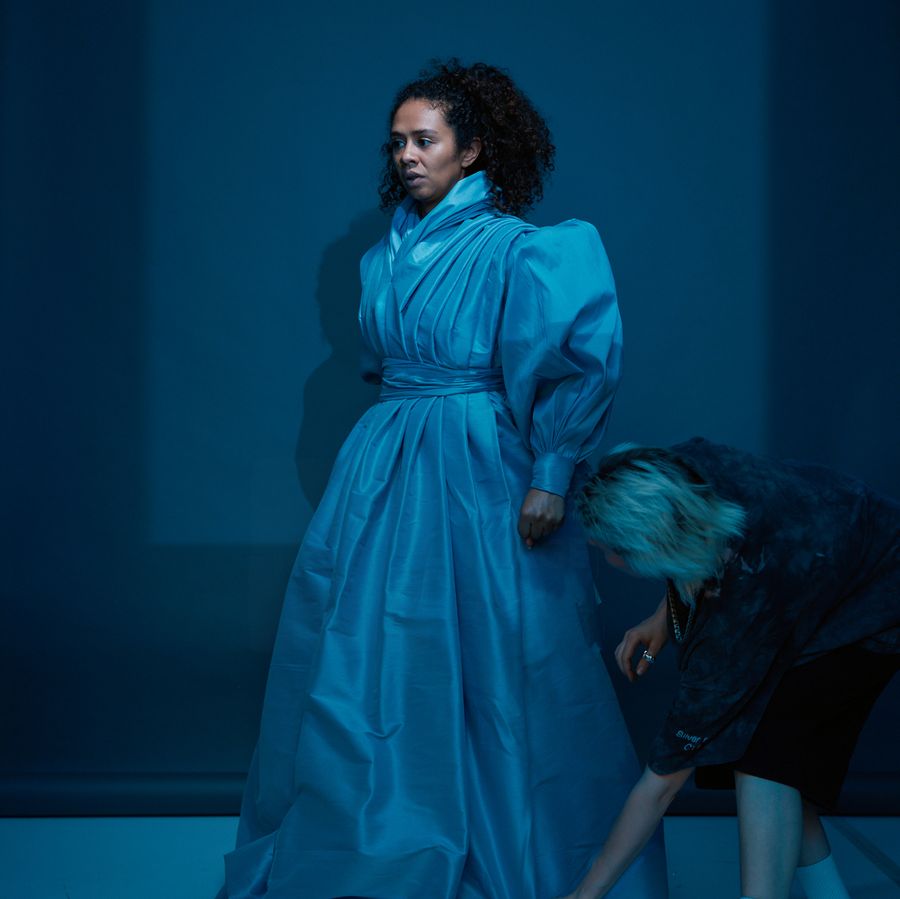
Key artwork: Rebecca Pitt
Artwork photography: Rich Lakos


About the play
Who has the right to tell which stories? Where's the line between inspiration and exploitation? Does any of that matter, if the story's good?
Scandinavia, 1879. Playwright Henrik Ibsen scandalises audiences with A Doll's House, whose heroine Nora walks out on her family. But to one woman, the story is all too familiar. Laura Kieler, a young writer who had turned to Ibsen for help, finds that he has stolen her harrowing circumstances as the play's raw material. As Ibsen's literary fame ignites, Laura's life falls apart, and she must fight to save her reputation and her relationship with her family.
In Burning Down the House, Laura steps out of Nora's shadow and takes a theatrical flamethrower to Ibsen's version of events.
Burning Down the House revisits Henrik Ibsen's most renowned work, A Doll's House, shifting the focus onto Laura Kieler, the real woman, writer, and friend of Ibsen whose difficult personal circumstances he rewrote into the character of Nora without her knowledge. A writer herself, Kieler responded with her own play, Men of Honour, a bold indictment of Ibsen's appropriation of her private life. Burning Down the House asks urgent questions about the ethics of biography, the silencing of women, and who is allowed to tell another person's story. In doing so, Breach's new play provides a powerful corrective to the history of A Doll's House and brings to life a woman writer little known outside Scandinavia who – unwittingly – served as the model for one of the world's greatest feminist plays.
Related Events
Drawing out some key themes of the production, and its cultural context, these free events offer a deeper dive into the development of the show and the stories it tells.
These events are free to all Burning Down the House ticket holders but should be booked in advance.
Post-show Talk with BSL Interpretation
Saturday 3 October 2026, evening (after the 7.30pm performance)
Join the writers of Burning Down the House and co-Artistic Directors of Breach, Billy Barrett and Ellice Stevens for a conversation with Oxford University researchers Professor Kirsten Shepherd and Tzen Sam about how the show developed from new research into the remarkable story of Laura Kieler.
Post-show Discussion: Can Nora Speak English? Translating Stage Worlds to World Stages
Wednesday 7 October 2026, evening
Literary Translator Gaye Kynoch, Oxford University researcher Tzen Sam and Breach co-writer and performer Ellice Stevens explore the process of translating playscripts. Kynoch's new translations of Henrik Ibsen's A Doll's House and Laura Kieler's Men of Honour have both informed Burning Down the House.
A translation is a negotiation and a mediation between two languages and their respective cultures. A translator and a theatre company are travellers in time and space, in this instance between the late 19th century and 2026, between Dano-Norwegian and UK-English, between Oslo-Copenhagen and an Oxford-Schwarzman stage. How do voices from the past and the archives tell their stories today, and in a language that is foreign to them? How does a translator go about hearing these voices and letting them speak with their own words but in another language, and are they then the same people and characters?
Men of Honour — Rehearsed Reading
Saturday 10 October 2026, 2pm
Breach presents a script-in-hand reading of Laura Kieler's Men of Honour, her bitingly satirical response to her life story being stolen by Henrik Ibsen for A Doll's House. Men of Honour tells the story of a young woman captivated by a famous writer who appropriates people's lives for his art and then discards them.
This is a remarkable opportunity to hear Kieler's play in its entirety, which has been translated by Gaye Kynoch into English for the first time. An adapted excerpt of the play features in Breach's production of Burning Down the House.
Following the reading, join literary translator Gaye Kynoch and leading Ibsen scholars Kirsten Shepherd and Tzen Sam to dive deep into conversation about reclaiming Laura Kieler's voice and her journey as an artist and activist in her own right.
Men of Honour — post-reading discussion
Saturday 10 October 2026, 4pm
Following the reading of the play, join literary translator Gaye Kynoch and leading Ibsen scholars Kirsten Shepherd and Tzen Sam to dive deep into conversation about reclaiming Laura Kieler's voice and her journey as an artist and activist in her own right.
Devisors and Performers
Henrik Ibsen |
Peter Clements |
Suzannah Ibsen |
Sophie Steer |
Nora |
Ellice Stevens |
Laura Kieler |
Jacoba Williams |
Victor Kieler / Torvald |
Yasser Zadeh |
Creative Team
Writers |
Ellice Stevens and Billy Barrett |
Director |
Billy Barrett |
Set Designer |
Laura Hopkins |
Costume Designer / Associate Set Designer |
Moa Johansson |
Lighting Designer |
Will Monks |
Movement Director |
Leanne Pinder |
Composer & Sound Designer |
Hugh Sheehan |
Academic Lead |
Professor Kirsten Shepherd (Professor of English and Theatre Studies, University of Oxford, and Fellow of St Catherine's College) |
Academic Lead / Research Assistant |
Tzen Sam (DPhil candidate, Faculty of English and Jesus College, University of Oxford) |
Literary Translator |
Gaye Kynoch |
Artwork |
Rebecca Pitt |
Production
Executive Producer |
Sally Cowling |
Production Manager |
Helen Mugridge |
Technical Stage Manager |
Eliott Sheppard |
Company Stage Manager |
Adriana Perucca |
Artwork Photography |
Rich Lakos |
Artwork |
Rebecca Pitt |
PR |
Bread and Butter PR |
Burning Down the House has been supported by a Knowledge Exchange Fellowship (2022 to 2023) and by the TORCH Knowledge Exchange Innovation Fund (2022). In March 2024, Breach Theatre were awarded a major grant by Ibsen Scope to develop the piece.
Further acknowledgments
Very warm thanks to the many people in Oxford and beyond who have supported this project, especially John Fulljames and Elizabeth Lawal of the Humanities Cultural Programme for their extensive work to bring this production to the Schwarzman. Thanks also to colleagues in the Faculty of English at Oxford who have so warmly supported the project from its inception and given us opportunities to share the work in progress. A special thanks to Alex Coke and the TORCH team and to Jude Kelly and colleagues at St Catherine’s College, Oxford for generously showcasing our work. Also thanks to DTFE (Danish Theatre Forum Europe) for featuring our research and production process at their 2023 British Library symposium. We are grateful for the support of Anette Lien of the Norwegian Embassy for including us in the Ibsen 2028 planning events. Our gratitude also goes to Professor Ulla Kallenbach (University of Bergen) for introducing Kirsten to Gaye and thus helping to set in motion the publication of the first English translation of Kieler’s play Men of Honour.
Henrik Ibsen and Laura Kieler: A Doll's House, Men of Honour, When We Dead Awaken, translated by Gaye Kynoch and edited by Kirsten E. Shepherd and Tzen Sam, was published by Oxford University Press in 2025.
Supported using public funding by the Arts Council England. Also supported by TORCH and Ibsen Scope.
Introducing: Laura Kieler
Laura Kieler (née Petersen) was a Dano-Norwegian novelist, playwright, and campaigner for social justice. She was born in Tromsø, Norway, in 1849, and died in Ålsgårde, Denmark, in 1932. Over the course of her long and prolific career, she wrote and published approximately thirty literary works including novels, short stories, and plays. She made her literary debut in 1869 when, at the age of 19, she wrote and published her first novel, Brand’s Daughters, a robust response to and criticism of Ibsen’s play Brand (1866), taking issue with his negative depiction of Christianity. Kieler dedicated the novel to Ibsen and, upon its publication, sent him a copy. Ibsen was impressed, and began a correspondence with Kieler to mentor the young writer. He invited her to visit him and Suzannah in Copenhagen in 1870, and again in Dresden in 1871, where she spent two months of the summer meeting the Ibsens almost daily. Kieler was a young, bright addition to the Ibsen household, and Ibsen fondly nicknamed her his lærkefugl, or ‘skylark’, an endearment he would later repurpose for Nora in A Doll’s House.
Soon after, Kieler met a Danish schoolmaster, Victor Kieler, marrying him in 1873 and moving to Viborg, a cathedral city in central Jutland, Denmark. She gave birth to their first child in 1874 and lost their second child in infancy in 1875. In 1876, she published a successful second novel entitled Everil, but discovered that Victor was dangerously ill with tuberculosis. Despite Kieler’s entreaties, Victor refused to borrow money from his wealthy family and insisted that he did not need a costly trip to southern Europe to recover. Without her husband’s knowledge, Kieler took out a secret loan of 6,000 kroner and, telling him that she had earned the money from her writing, financed a year-long trip to Italy for the sake of Victor’s health. The trip worked, and he fully recovered.
On the way back to Denmark in the autumn of 1876, the Kielers visited the Ibsens in Munich, where Kieler confided to Suzannah the history of her secret loan and her current debt. Back in Copenhagen, Kieler’s life began to spiral out of control: in order to repay the first loan, she took out a second, even bigger one of 10,000 kroner. She became pregnant again while working feverishly to pay off her debts, anecdotally surviving on half a bottle of beer a day. She pinned all her hopes on finishing and publishing a new novel called Ultima Thule, which she finally completed in March 1878. Hoping to get it accepted for publication and thus acquire an advance against the royalties, she sent Suzannah the completed manuscript, asking her to persuade Ibsen to recommend it to his publisher Hegel. On 26 March 1878, Ibsen wrote to Kieler, emphatically rejecting her request on the grounds that the manuscript was not good enough. Moreover, he strenuously advised Kieler to confide her problems to Victor so that he could ‘take on himself the sorrows and worries that are causing you so much pain, worry, and anxiety’. On receipt of Ibsen’s letter, Kieler was devastated. In a final, desperate attempt to pay off the loan, she forged a promissory note and was found out. At last, she confessed the truth to her husband. Accounts suggest that Victor was initially sympathetic to her plight, but under pressure from his family amidst the deepening social scandal, became increasingly furious with his wife. In the midst of this fall-out, Kieler suffered a nervous breakdown, and on 15 May 1878 was committed by her husband to the Sankt Hans Hospital for a month. On her release, Victor filed for divorce and obtained custody of their two children, who lived with his parents for the next two years.
During this time, Kieler lived with her mother and returned to writing, publishing her novel André fra Kautokejno in 1879. Her attempt to quietly move on from the traumatic events of the preceding year were scuppered by the momentous premiere of A Doll’s House in Copenhagen in December 1879, which revived the details of her painful story – from her husband’s tuberculosis diagnosis to her secret loans – and splashed them across the public stage for all to see. Despite, or because of, this new setback, Kieler and Victor reconciled the following year, reuniting their young family. Though their marriage remained strained, they would go on to have three more children together. Kieler worked hard to repay her debts, eventually achieving this within twelve years with no help from Victor.
Men of Honour (written 1888, and published in 1890) was Kieler’s attempt to spotlight the real-life consequences for those who inadvertently find themselves models for someone else’s art. Kieler’s bitingly satirical, even caustic, portrayal of the writer Robert Huitfeldt and the affected pomposity of his literary circle pointedly asks us to reflect on the price of literary fame, and the ethical obligations that come with telling someone else’s story without their permission. Yet the play’s premiere, in Copenhagen in 1890 and in Christiania in 1891, provoked a storm of controversy in the press and was widely assumed to be a direct attack against the prominent Danish literary critic Georg Brandes and his callous treatment of his mistress, the Swedish author Victoria Benedictsson, who committed suicide in 1888 after he rejected her. In anger at this perceived attack, Brandes wrote a long review of Halvorsen’s Dictionary of Norwegian Authors in which he revived old rumours about Kieler forging a banknote not in order to save her husband but to prettify her home. Once more, a whole decade later, Kieler found herself back in the limelight with her connection to Ibsen’s Nora under intense scrutiny.
Kieler considered suing Brandes for defamation but decided against it. Instead, she wrote a letter to her good friend Fredrika Limnell, appealing for her help to convince Ibsen, their mutual acquaintance, to intervene once and for all and publicly deny that Kieler had served as his model for Nora. Ibsen wrote back to Limnell, resolutely declining to do so. Kieler was undeterred, and in November 1891, while passing through Christiania, wrote to Ibsen asking to meet. A letter survives from Ibsen cordially inviting her to call on him the next day. Kieler’s memoirs suggest that they met, at his home, for a four-hour long discussion, during which Ibsen, deeply moved, broke down in tears, but steadfastly refused to accede to her request that he publicly deny the connection between her and Nora. Kieler and Ibsen never met again.
Deeper insight into what was said in this last meeting between Kieler and Ibsen may lie in Ibsen’s final play, When We Dead Awaken (1899), published with the subtitle, ‘A Dramatic Epilogue’. The protagonist of the play is Arnold Rubek, a successful sculptor at the end of his career who is unexpectedly confronted by Irene, a woman who had modelled for an early sculpture which had launched his international fame and fortune. Irene challenges Rubek to acknowledge the consequences of his actions, accusing him of being an ‘artist, who so utterly blithely and negligently took a hot-blooded body, a young human life, and sapped the soul from it, – because you needed it to create a work of art.’ Ibsen here repurposes Kieler’s accusation from their conversation in 1891 that Ibsen had ‘stolen her soul’. When We Dead Awaken can thus be seen as a direct response to Kieler’s criticism of Ibsen for using her life for his art. As Adrienne Rich suggests, it is a play ‘about the use that the male artist and thinker – in the process of creating culture as we know it – has made of women, in his life and in his work; and about a woman’s slow, struggling awakening to the use to which her life has been put.’
When We Dead Awaken thus completes the trilogy of plays that ground the literary relationship between Kieler and Ibsen, articulating a sustained conversation that took place between both writers across a period of twenty years. The three plays probe the blurred lines between life and art, and ask us to reflect both on the process and the costs of artistic creation, and its impact on those we leave behind.
Introducing: A Doll’s House
Let’s start with the ending of this play: a woman leaves her husband and children in order to find out from scratch who she really is and what she thinks and believes, not what the patriarchy has told her to think and believe. She calmly explains to her husband that she needs to educate herself.
This was a radical step that shocked audiences in 1879 and probably still shocks many of us today. Audiences at the time sat in stunned disbelief, fully expecting a further act to the play in which everything would be resolved and Nora would stay with her family.
Ibsen didn’t provide that because he was showing a profound societal problem to which there was no solution. As he put it in his ‘Notes to the Modern Tragedy’, men and women are spiritually different, yet women have to live according to laws made by men.
Nora Helmer has committed forgery in order to obtain a secret loan so that the family can go south to a warmer climate for her husband, Torvald’s, health, as he has been diagnosed with tuberculosis but is too proud to borrow money from the bank or his family. Her deed was entirely motivated by love; but in the eyes of the law, it is illegal. All of this has happened before the play opens. We see her husband fully recovered and thriving in his new position as bank manager, and Nora happily decorating the Christmas tree. Then – as so often in Ibsen’s plays – the submerged past starts to resurface, and Nora’s life begins to unravel. Her secret money-lender, Krogstad – whom she is gradually repaying through scrimping and saving (and secretly doing copying work in the evenings when her husband thinks she is busy with household pastimes) – threatens to tell Torvald the truth, spurred on by his dismissal from the bank by none other than the moralizing Torvald, who feels that Krogstad’s past financial misdeeds (for which he has done penance) are a bad influence. Two family friends, Mrs Linde and Dr Rank, try to provide support as circumstances heat up for Nora when Krogstad leaves a letter for Torvald that would reveal all about Nora’s secret loan. This letter lies in the letter box waiting for Torvald to open it, so Nora becomes almost hysterical in her attempts to forestall him seeing it – including a wild dance called the tarantella which she is rehearsing for a costume party and performs to distract him. But she is exhausted and finally gives up, steeling herself for his reaction. He is outraged and angrily denounces her, saying she is unfit to be a mother to their children. Yet a few minutes later, Krogstad – softened by the wise rhetoric and healing powers of his old flame Mrs Linde – retracts his accusation of Nora, and Torvald’s reaction is: ‘I am saved!’ He joyfully goes to take Nora into his arms and celebrate this reprieve, but it is too late: Nora has had a revelation. As she explains to Torvald in the discussion of their marriage that closes the play, she must leave him and begin to educate herself alone, free of the influences of her father’s teaching and her husband’s shaping of her. The play ends with the sound of the door clicking softly in the lock.
Enter the world of BURNING DOWN THE HOUSE
"We're delighted to be bringing Burning Down the House to the Schwarzman Centre, following such a fruitful collaboration with Kirsten, Tzen, and Gaye for the past five years. It feels very vital and right that the production starts its life in Oxford. Laura Kieler's story taps into contemporary conversations surrounding the ethics of storytelling, explores the blurry line between creativity and inspiration and questions who has the right to tell what stories. The subject matter is complicated, murky and thrilling."
Billy Barrett and Ellice Stevens
From Oxford research to a brand new play: The Story behind Burning Down the House
By Kirsten Shepherd
An innovative collaboration between research and theatre
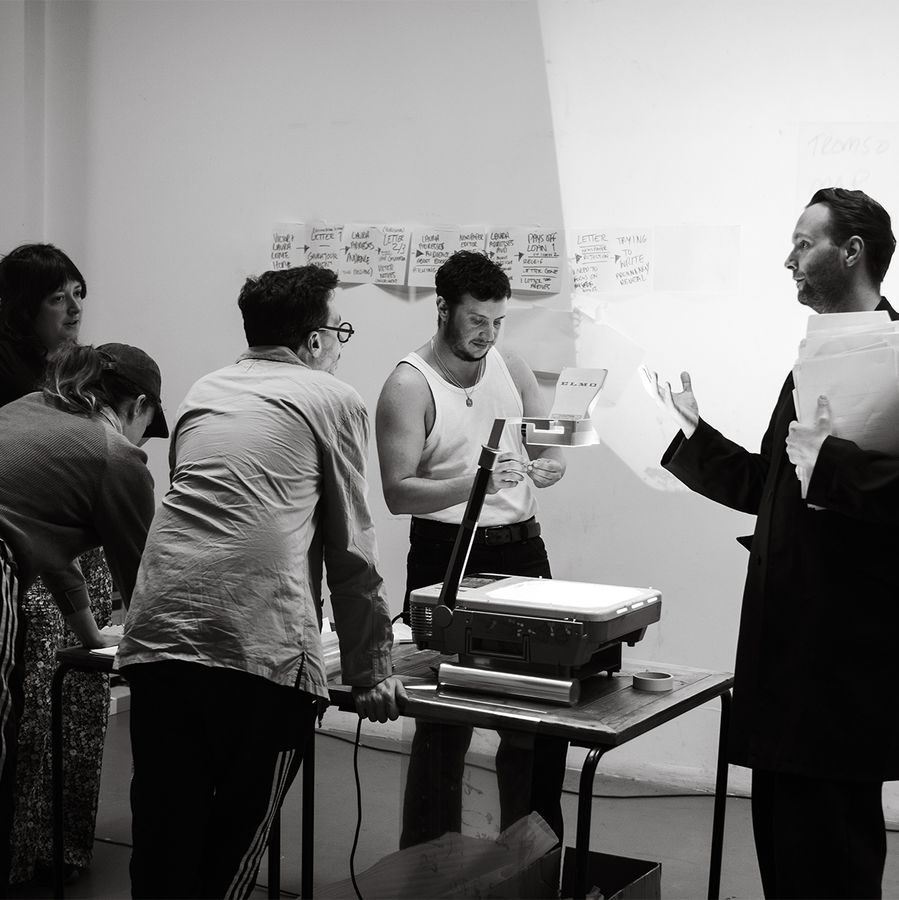
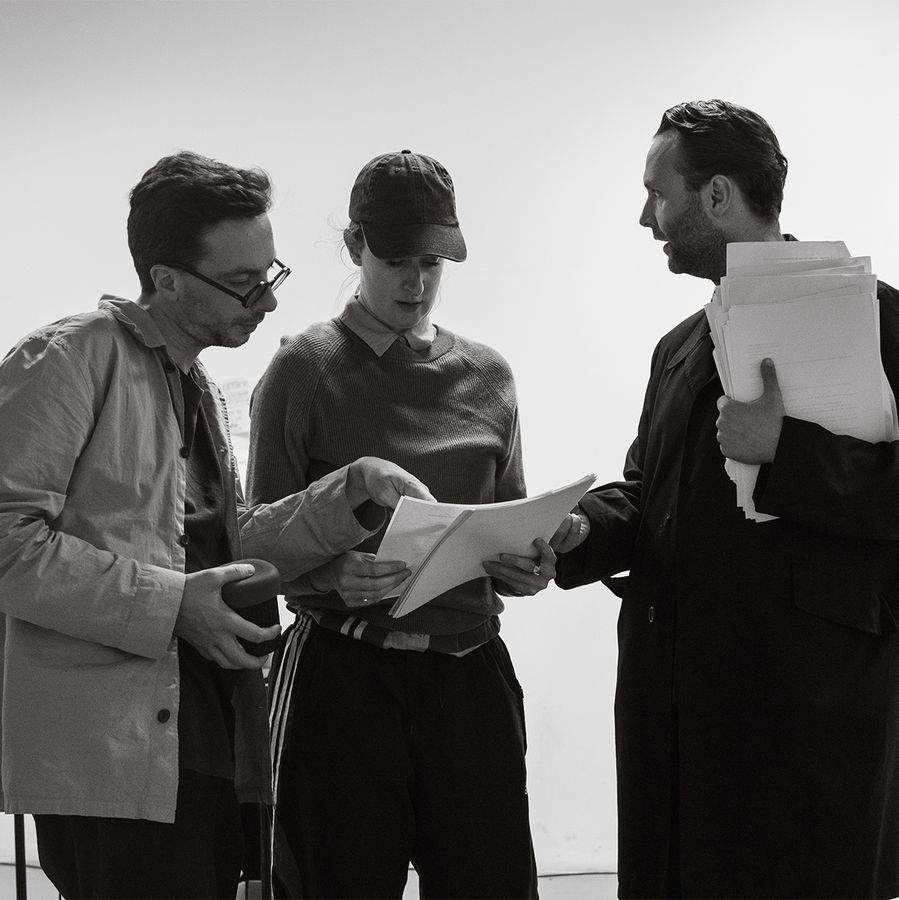
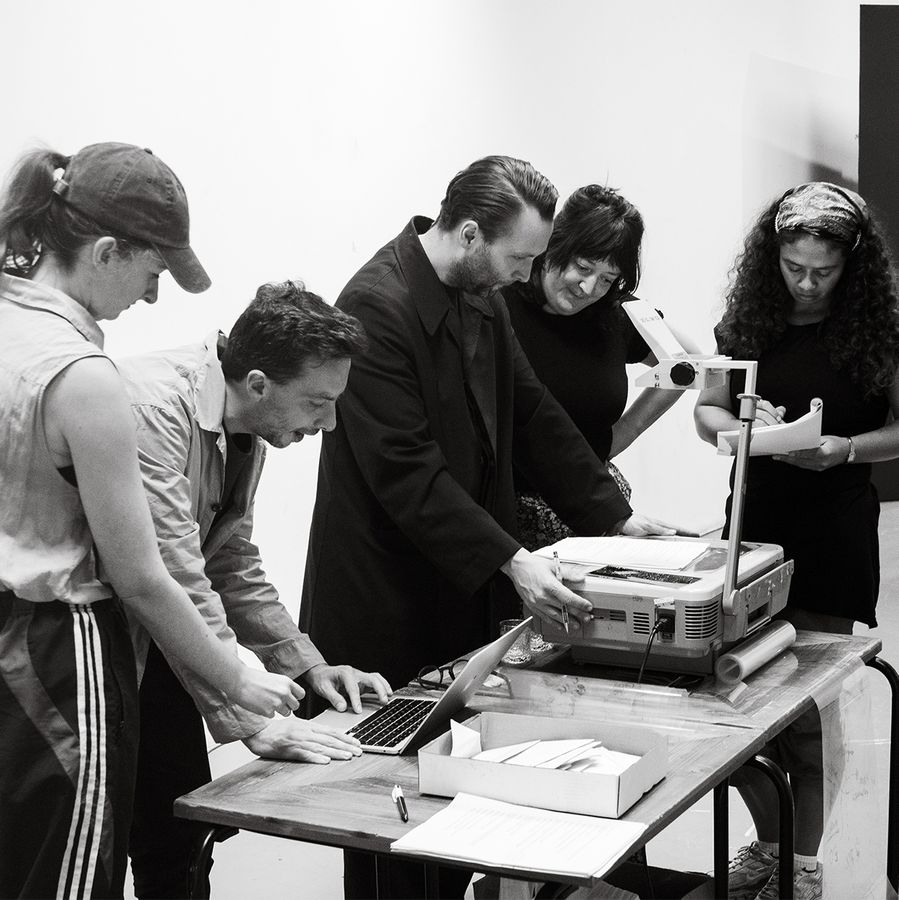
Burning Down the House is the product of a collaboration that I initiated with Billy Barrett and Ellice Stevens of Breach Theatre company and with two other vital members of our group: Tzen Sam, Research Assistant and doctoral candidate in English here at Oxford, and Gaye Kynoch, a literary translator based in Copenhagen with a background in theatre and a particular [gv2] focus on Scandinavian literature. Billy and Ellice have been working with Tzen, Gaye, and me over the past 5 years to develop this show. It has been a fascinating process to turn research into theatre and we have learned so much about making theatre, something that academics studying theatre usually don’t get to do very often.
Why I started this collaboration
I have been studying Ibsen’s plays since 1990, when I spent a year at the University of Oslo on a Fulbright Grant and had the chance to learn from some of the great Ibsen scholars of the time and to study the plays in the original language. It was full immersion, and I was hooked. I combined my background of growing up speaking Danish with my new academic interest in Ibsen and in Norwegian literature more broadly. It’s a handy combination for an Ibsen scholar, since Ibsen wrote in Dano-Norwegian, at a time when the Norwegian language was developing away from its Danish influence.
I didn’t hear about Laura Kieler at that time. It was the following year, when I started my studies at Oxford, that I began to see her name cropping up here and there in Ibsen studies—a footnote or a brief mention in passing when writers discussed A Doll’s House. For the next thirty years, I kept having that experience, and I was increasingly intrigued by the incongruity that so little was said about the woman whose life events had inspired one of the world’s best known and most produced plays. Who exactly was Laura Kieler? Why did we never hear about her? The fact that she was a prolific and successful writer in her own right was a major part of the intrigue for me, as I have spent much of my career researching neglected women writers. I wanted to know more.
Fast forward to 2021, when I attended a talk given by Billy Barrett and Ellice Stevens of Breach Theatre here at Oxford, as part of a TORCH-funded research network that I was co-convening called Reimagining Theatre and Performance. I was riveted by their talk with Professor Sos Eltis about making their show It’s True It’s True It’s True, about the Renaissance painter Artemisia Gentileschi and her brave fight for justice. I went up to Billy and Ellice afterwards, introduced myself, and told them about my idea of developing a show about Laura Kieler and the true story behind Ibsen’s A Doll’s House. Would they be interested in working with me? Thankfully, they said yes and that launched our 5-year collaboration culminating in this brilliant new play, Burning Down the House, now having its world premiere in our new Schwarzman Centre for the Humanities. It is the first original play to emerge directly from research in the Faculty of English and in the Humanities Division.
The research that underpins the collaboration
Our research on Laura Kieler has brought us into archives in Copenhagen and Oslo, looking at her unpublished letters and her ‘patient journal’ from her month in the asylum, which Tzen tracked down for us. Gaye has translated Kieler’s play, Men of Honour, into English and it is now published in the other major output of the project: an Oxford World’s Classics volume of three plays, Ibsen’s A Doll’s House, Kieler’s Men of Honour, and Ibsen’s When We Dead Awaken, that was published by OUP in November 2025. I co-edited this volume with Tzen, who is finishing her doctoral work on Ibsen’s first female translators in Britain, and Gaye provided the translations. Gaye is an expert translator of Scandinavian literature, most recently a 3-volume edition of works by Ludvig Holberg, the great 18th-century Dano-Norwegian playwright and one of Ibsen’s main influences. Working with these two women has been an extraordinary privilege.
The book we published together contains our Laura Kieler research. In the book’s introduction you can read the fascinating story of Laura and Henrik’s interactions and understand in fuller detail the background to the play Burning Down the House. We also touch upon some of the ways in which Ibsen changed Kieler’s story when he fashioned his own play from it, and how his seemingly small changes made a dramatic difference. For example, Ibsen made Nora a housewife rather than a woman writer; she was thus an ‘Everywoman’ figure, representing all women—mothers, sisters, wives, aunts, daughters. Her behaviour couldn’t be dismissed or explained away as specific to her profession, women writers being often caricatured and dismissed as ‘cranky’ and erratic in the period. He amplified Nora’s culpability by having her commit the crime of forgery (even worse, forging the signature of her newly deceased father), which Laura had not done. He made Nora seem lightweight, vain, deceptive, and flirty. And, most damagingly—yet a master stroke on Ibsen’s part—he had Nora leave her husband and children at the end of the play (though not with a ‘slam’ of the door, as is often mistakenly alleged, but with just the sound of the front gate clicking into place as she leaves—because she does not leave in anger, but with calm resolution).
These changes show Ibsen’s instincts as a playwright and ensured A Doll’s House’s success, but they were deeply detrimental to Kieler. For the rest of her life, she tried to get Ibsen to state publicly that the character had nothing to do with her (he refused), and wrote articles explaining that ‘I am not Nora.’ Reading these articles, and seeing the efforts Kieler made to set the record straight, impressed on us how profoundly the Ibsen-Kieler narrative is about agency: Kieler trying to wrest some kind of control, rather than just having things happen to her. Researching her also reinforced the depth of her influence on Ibsen's thinking about women and about theatre; Ibsen’s Notes to the Modern Tragedy demonstrate this most strongly.
The autonomy of theatre
Yet, a play is not merely a vessel for facts. As with all works of art that emerge from true stories, Burning Down the House is its own creative entity. It is at once indebted to our research yet entirely free to depart from it and take any artistic license it chooses. The test of the play is not how closely it adheres to our research but how well it works as a piece of theatre.
In my other main area of research, I work on the relationship between theatre and science, and one of the recurring tensions in discussions about plays that engage with scientific ideas is: how accurate is the science in the play? Should a ‘science play’ first and foremost educate? What is a play’s obligation to the scientific facts it is dealing with? These questions have often dominated debates about science and theatre because of what’s at stake: for Michael Frayn’s Copenhagen, for example, the pressing questions it raised about responsibility for the development of atomic weapons. The play generated tremendous interest in how close to the ‘truth’ it got in its representation of history. The debates were fascinating, with scientists and artists poring over the facts and testing the play against them, yet sometimes this focus threatened to overshadow the play’s status as a piece of theatre, a creative work. It will be interesting to see what audiences and critics make of Burning Down the House in relation to perceived ‘truths’ about the historical and literary material with which it engages.
This is where the magic of performance – and especially of Breach’s unique approach to theatre and storytelling – comes in. What entranced me back in 2021 when I heard them speak and saw their work, and when I went to their acclaimed 2025 play After the Act at the Royal Court in 2025, was their inventiveness and playfulness with true stories — how they brought real people from long ago to life through their combination of verbatim dialogue, innovative visual techniques, powerful imagery, incisive writing, and vibrant music, all the while keeping a firm hold on the foundational facts of the stories and prompting serious reflections about the material. Their work is a wonderful mixture of real-life sources and artistic freedom that sparks discussion and debate. Burning Down the House will, I’m sure, showcase Breach’s trademark style of forceful, illuminating engagement with history and some of its untold stories.
There might not be as high stakes in the Ibsen-Kieler story as in the history of German and Allied bomb projects during World War II, but nonetheless, this imaginative encounter with the truth matters deeply. One woman’s traumatic experiences generated the world’s most iconic feminist play, a drama that is read and produced globally and that has changed lives, often in places where women are still denied equal rights to men. A Doll’s House has to date been performed in 99 countries across the world (see the Ibsen Performance database, an extraordinary resource on where and when Ibsen’s plays have been produced around the world). Burning Down the House helps us confront issues at the forefront of our contemporary lives right now, such as consent and appropriation, the #MeToo movement, listening to women and their stories, and valuing their experiences.
Serendipity
The word that best describes this whole Ibsen-Kieler project, including the co-edited Ibsen-Kieler volume and the collaboration with Breach on Burning Down the House, is ‘serendipity’—the unexpected and happy alignment of shared interests and complementary capabilities. Serendipity launched our project right from my first approach to Breach after the seminar in 2021; it brought Tzen into the collaboration as Research Assistant, a position that she was extraordinarily well equipped to fill and that yielded exceptionally important material such as Laura Kieler’s ‘patient journal’ from her time in the asylum in Copenhagen; and serendipity gave us Gaye, whose translations of Ibsen and Kieler sparkle and leap off the page, refreshing Ibsen for new audiences and introducing Kieler for the first time to the English-speaking world. Serendipity cropped up again in 2023 when Breach were approached out of the blue by the Liverpool Institute for the Performing Arts asking if they had any material they were working on that they’d be willing to use for teaching a group of acting and design students for their final performance projects. Our Liverpool interlude was a brilliant experience as we got to see Breach at work up close over a sustained period, managing to devise a show with 35 acting students (featuring 4 Noras and Lauras!) and seeing how they work with raw research materials in real time. Serendipity all the way—but it takes agility and readiness to seize such opportunities as Breach did. As the Swedish director Ingmar Bergman reputedly said, 'only those who are well prepared are free to improvise.’
Money matters
The project could not have happened without financial support, and this came from TORCH in the form of a TORCH KE Innovation Seed Fund grant and then a TORCH Knowledge Exchange Fellowship that I held in 2022-23. Breach then got a prestigious Ibsen Scope award, its first international funding and a major boost to the devising process of the show, followed by Arts Council funding to finish developing it. The Humanities Cultural Programme has provided exceptional support as well in enabling the show to be premiered here.
Translating A Doll’s House & Men of Honour
By Gaye Kynoch
It’s not every day that you’re asked to translate one of the most famous, most performed, most influential plays of the past 150 years along with the play written in response by the subject of that famous play. I decided it was probably best not to think about these small details, but just to transport myself into that Nordic sphere and get on with the job safe in the knowledge that I had the backing of a wonderful editorial team in Kirsten and Tzen.
When translating a play script, I don’t see it as my job to ‘interpret’ or point up the words and potential meanings in the way a literary scholar, theatre historian, stage director, designer or actor would. As translator, I aim to give the theatre practitioners the same material to work with that the playwright gave her or his potential theatre troupe – and then each new production can interpret the plays all they like. But without the life drawing of a face, you can’t really make a meaningful abstract interpretation of that face. There’s no such thing as a definitive translation of a work, but if the story isn’t presented in translation as it was written in the original – if there’s a filter or two (a pre-conceived interpretation infused into the translation) too far – then the executors of the script won’t know what the play actually said, and their production might miss out and not be the story the playwright wrote in their own language.
Today’s prospective non-Scandinavian audience might not have expansive knowledge of the societal, political and cultural setup in 19th-century Norway/Denmark, i.e. Ibsen’s and Kieler’s worlds in these plays, and so it is important that the context and the meaning embedded in the playwrights’ carefully planned words and rhythms aren’t lost in our modern world. Research is thus key; in this instance, working with Kirsten and Tzen, expert scholars in the period and the playwrights, has been invaluable. Also, it really helps to have developed antennae that flag areas of doubt, maybe where I draw a total blank or just a sense that there’s more to this bit than is meeting my eye, and then additional research will be needed. And footnotes! I love footnotes – and with plays from long ago it’s always good to provide extra information, rather than trying to make a modern or domestic equivalent that will likely jar within the stage world the playwright has created.
The core of these stories lies in the compressed time-and-space of the play scripts, in the sounds of the words, the beat of the rhythms and movements within the traditional stage space and its three physical walls and the invisible fourth wall – plus, all importantly, what is taking place beyond this theatre and theatrical setting.
Ibsen and Kieler knew how to get their points across within the framework of a compelling story. And now those stories are being re-told within the framework of Burning Down the House. It’s a fascinating, multi-layered process of remediation. Breach Theatre has taken the translated stories in A Doll’s House and Men of Honour and the translated backdrop to those stories and re-translated them in their wonderfully innovative devised show. So the translation work has been, in a way, a re-telling of Ibsen’s story of Kieler’s (life)story and then Kieler’s story of her (life)story (and Ibsen’s use of that story) in response to Ibsen’s story of her (life)story… now all told in a story that is (both literally and in terms of stagecraft) presented in a different language and a different context.
Rethinking Ibsen through Laura Kieler
By Tzen Sam
A Doll’s House was published on 4 December 1879 and premiered on 21 December of the same year in Copenhagen. Ibsen’s depiction of the young wife who calmly walks out on her husband and children in search of personal growth caused an immediate sensation, and would go on to have a profound impact on the debate on women’s rights and the history of modern theatre. Today, it occupies an uncontested place in the Western dramatic canon, and has been translated and performed all over the world.
I knew all this when I first encountered Ibsen and A Doll’s House during my undergraduate degree at Cambridge, but I had not yet begun to think seriously about what this reputation as a literary and dramatic behemoth might override or conceal in terms of peripheral narratives and peripheral voices. A chance introduction to Henrietta Frances Lord, the first English translator of A Doll’s House, through a lecture given by Giuliano d’Amico at UCL in 2017, suddenly illuminated the possibility of seeing the play through a radically different lens: in this case, through Lord’s alternative socialist, feminist, and theosophical frameworks. On closer examination of Lord’s translation, I realised that her tendency to tone down the emotiveness of Nora’s stage directions, from ‘terror’ to ‘anxiety’, from ‘hurries’ to ‘goes’, from ‘a shriek’ to ‘a cry’, amounted to small but significant interventions in the play’s meaning, helping to deliver a calmer and less hysterical female protagonist. I began to understand that translation could be the pivot through which alternative answers to the question of what Ibsen means, and to whom, might be articulated.
The compulsion to probe this mechanism of translation and, in the process, arrive at a more comprehensive understanding of the capacity of Ibsen’s plays to speak to different audiences and agendas, brought me to Oxford as a doctoral student to begin my research on Ibsen’s early female translators under Kirsten’s supervision. It has been an intensely stimulating and richly rewarding experience, enabling me to see and feel afresh plays I thought I knew so well. During one memorable moment in my first supervision, while we were discussing the way some women have been relegated to the shadows of Ibsen history and scholarship, Kirsten said, ‘Like Laura Kieler! Why don’t we talk more about Laura Kieler? Increasingly, I feel that ALL teaching on A Doll’s House should start with the story of Laura Kieler!’
These words cracked open for me a new way to perceive this most seminal of Ibsen’s plays, and to take full account of how the standard reception of A Doll’s House has overlooked the play’s genesis in a moment of aesthetic exploitation. The Laura Kieler backstory brings a new complexity and depth to A Doll’s House, new resonance to its plot and characters, and a fresh contribution to the perennial debate on where to draw the line between art and life. In the same way, I had read and seen When We Dead Awaken in production many times, and yet the play seemed not to speak to me. Re-reading it through the lens of Kieler’s relationship with Ibsen, I was struck by the startling illumination of aspects that had hitherto been hidden, transforming what had always seemed a male-centric play into an elegiac meditation on the impact and consequences of aesthetic exploitation.
It has been an extraordinary privilege to be a part of this collaborative project with Kirsten and Breach Theatre, and to work closely with Gaye as she translated A Doll’s House, Men of Honour, and When We Dead Awaken for twenty-first century English-speaking audiences and readers. I hope that the publication of our Oxford World’s Classics volume of these three plays has consolidated this shift in Ibsen scholarship that Kirsten proposed – a perspective that aims to bring forgotten women to the forefront of discussions on Ibsen.
Quotes
"As part of my ongoing academic work around Ibsen I have long been fascinated by the story behind A Doll's House, wanting to bring it out of the margins and footnotes of Ibsen studies. It's a story that I think readers and audiences of Ibsen's plays would find interesting, as well as deeply relevant to our own times. A major part of the story is Kieler's own subsequent play Men of Honour, her attempt to regain agency over her life and work."
Professor Kirsten Shepherd
"I approached Breach to collaborate on making a play about this story because of their impressive catalogue of work that brilliantly interrogates historical representations on stage, through a documentary lens and innovative theatricality. It felt like the perfect fit to bring this radical, moving and edge-of-your-seat story to the stage. It's been 5 years in the making."
Professor Kirsten Shepherd
Not Nora: reclaiming Laura Kieler
"Critics have long discussed Ibsen's contribution to feminist theatre. And yet, despite writing one of the world's most sensational feminist dramas, Ibsen bristled at being called a feminist. It is intriguingly, disturbingly ironic that the making of A Doll's House involved the appropriation of a real woman's story, with dire consequences for her and her family for which he never publicly apologised. 'I am not Nora,' she insisted many times. Burning Down the House cracks open what she meant by that."
Professor Kirsten Shepherd
Biographies
Devisor/Performers





Creative Team






About Breach Theatre
“Incessantly smart … a company of creative archivists” - The Guardian
Breach is an award-winning theatre company led by co-Artistic Directors Billy Barrett, Ellice Stevens and Executive Producer, Sally Cowling. We uncover captivating stories - from a 1970’s experiment into teaching dolphins English, to a rape trial in Renaissance Rome, to the impacts of homophobic legislation – in order to provoke new perspectives and illuminate the times in which we live.
There’s a rigour to our research and a playfulness to our work; combining a forensic documentary approach with bold and inventive devising. We are always in search of the “truth” about big issues, without claiming any sort of objectivity ourselves. Our shows are full of subversive humour and unafraid to be passionate and political.
★★★★★ “It might be set in 17th-century Italy, but the consistently exciting Breach Theatre's new show feels uneasily current.” - Alice Saville, The Financial Times on It’s True, It’s True, It’s True
★★★★ “Raw, joyous, psych-rock freak-out” - The Scotsman on Tank
★★★★ "Empowering and gut-wrenching... full of righteous anger and euphoric 80s synths" The Telegraph on After the Act
With thanks to all our creative collaborators who contributed to the development of Burning Down the House.
Also with thanks to Breach’s Board of Management: Grace Chapman, Richard Hatherell, Dela Hini, Stewart Pringle and Harry Tennison.
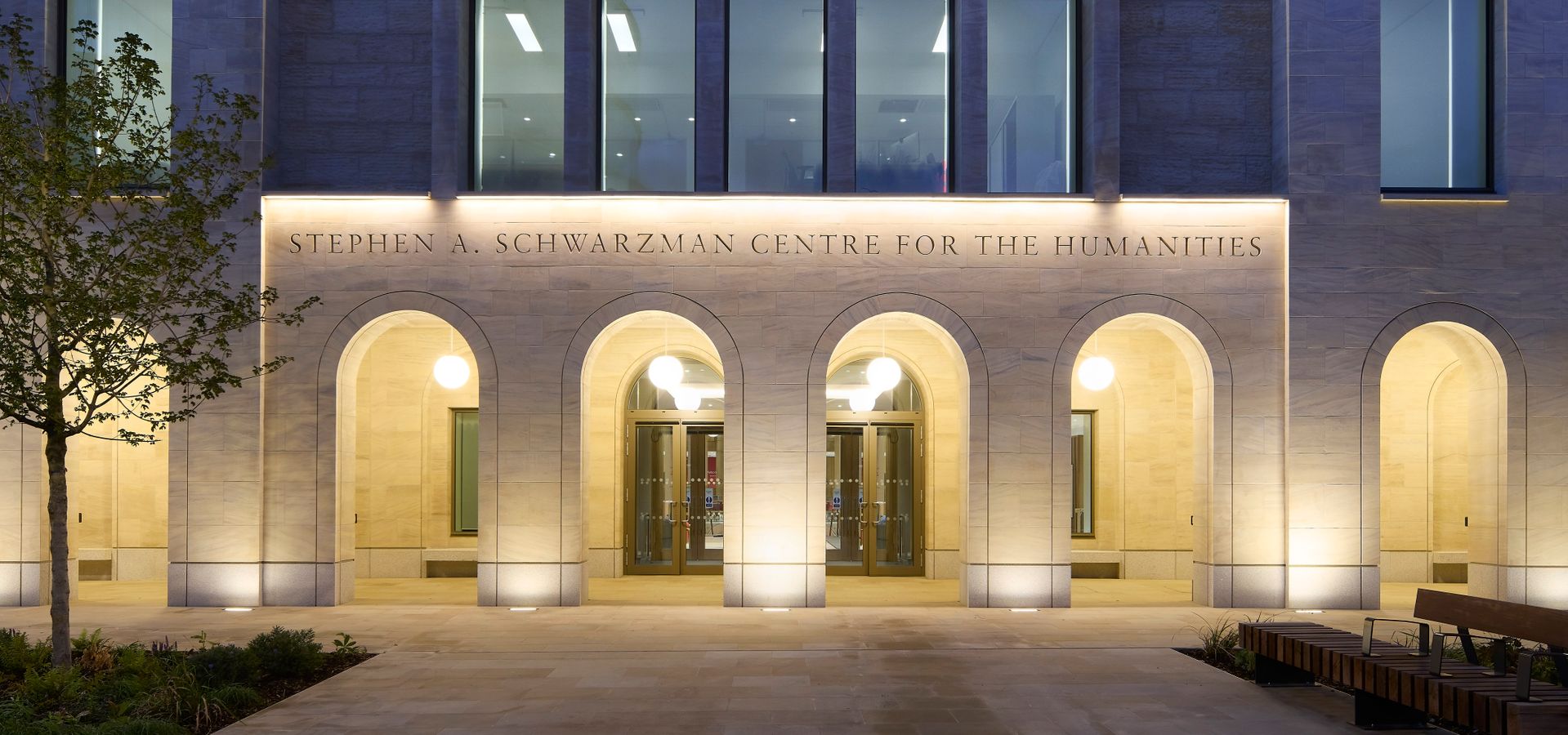
About the Schwarzman Centre
The Stephen A. Schwarzman Centre for the Humanities is a stage set for boundless creativity. Under one remarkable roof, academia and culture are breaking a new kind of common ground, bringing seven humanities faculties and research institutes together with world-class libraries, collections, exhibitions, cinema, music, theatre, and performance. Based at the University of Oxford, open to all.
We invite outstanding artists to collaborate with researchers to develop and create new cultural work. We are particularly grateful to Professor Kirsten Shepherd, Professor of English and Theatre Studies at the University of Oxford and Fellow of St Catherine's College, whose research on Ibsen and Laura Kieler is the foundation of this production, and to Tzen Sam, DPhil candidate at the Faculty of English and Jesus College Oxford, whose research support has been invaluable. We are also grateful to literary translator Gaye Kynoch for her translations of Kieler's play, articles, letters and journals.
We are proud to be a Passivhaus building.