Archive Dreaming: Behind the scenes
Interview with Jules Hyun, Producer at Refik Anadol Studio
30 April 2026
At the launch of Refik Anadol: Archive Dreaming - the first exhibition in the Schwarzman Centre’s White Box - we spoke with Jules Hyun, Producer at Refik Anadol Studio, about the ideas behind the work. Using AI, Archive Dreaming transforms a vast digital archive into a dynamic, dream-like experience, reimagining millions of documents in real time.
Could you talk us through the process behind Archive Dreaming, and how it moved from the initial concept to the installation that we see here today?
Archive Dreaming started as a residency project in collaboration with the Schwarzman Centre. We were interested in engaging with datasets from Oxford, so we spent a lot of time working with the Schwarzman Centre team identifying relevant datasets that were also ready to be processed by our machine learning systems.
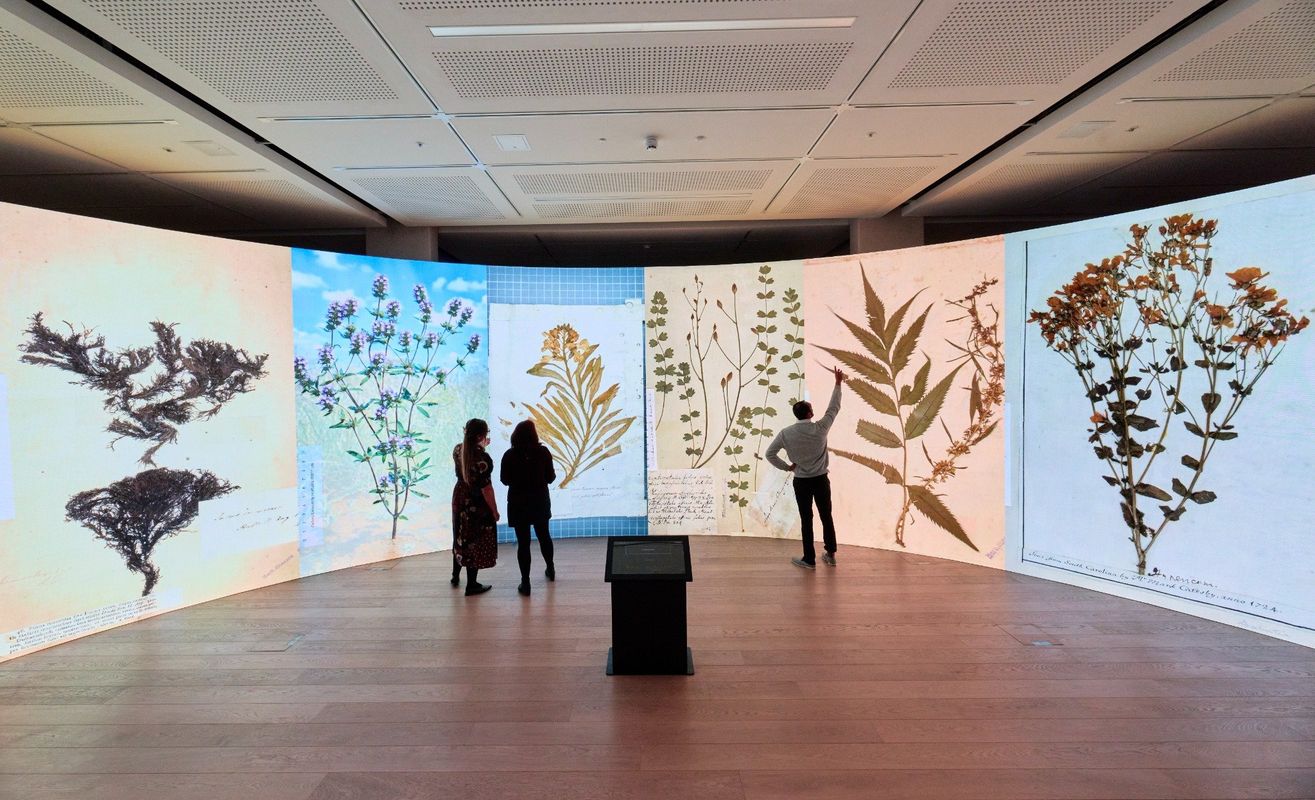
We worked with the Department of Biology and the University’s herbarium data, using about one-fifth of the total dataset to develop a kind of navigation tool. What’s special about this tool is that it allows you to navigate what AI has understood of the archive, rather than simply moving through it as a series of data points.
How is AI being used creatively in this work, and what role does it play in shaping what we’re seeing?
There are two parts to how AI is used in this work: archive mode and dream mode.
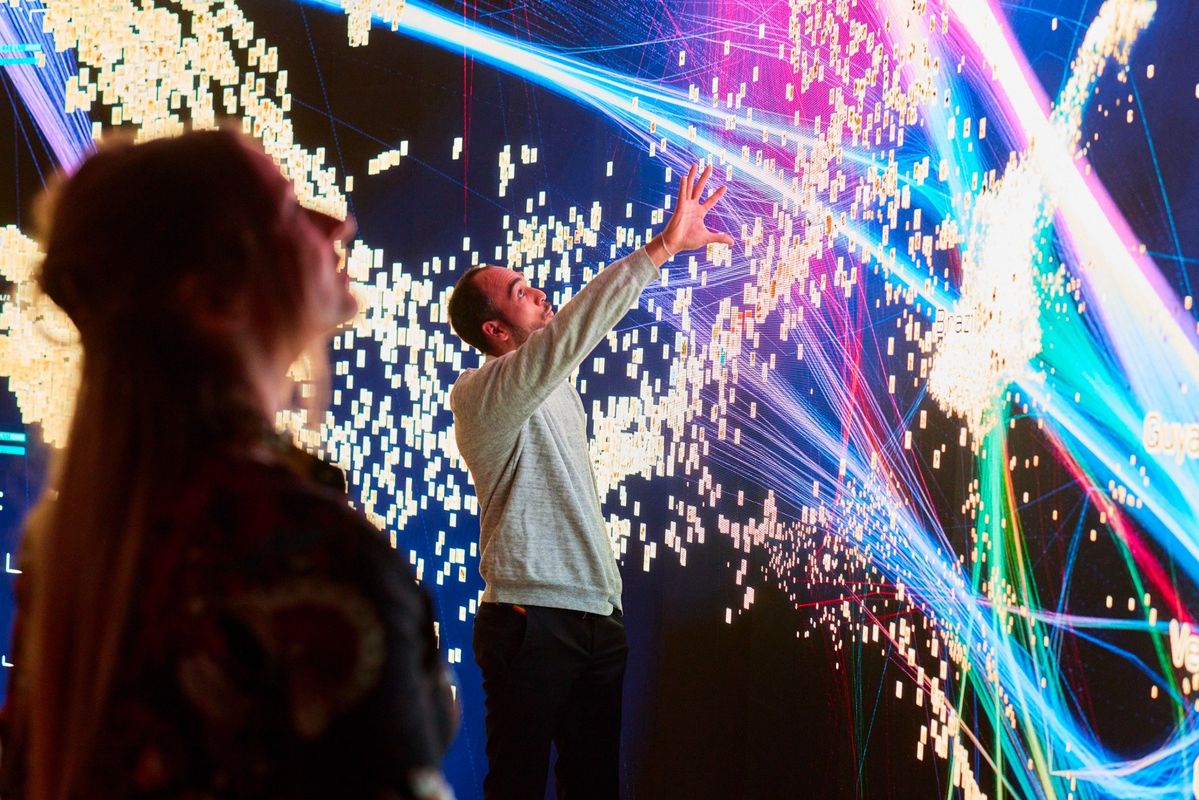
The archive mode is a navigation tool for a dataset that has been interpreted by AI. When we feed the system images, along with their metadata - essentially information about those images - it learns the relationships between them. It groups, classifies, and clusters them, while also visualising connections that wouldn’t normally be visible, shown as fine lines in the installation.
At the moment, there are three ways to explore the dataset: by country, by the collector of the specimens, and by taxonomy. Even within a single view, such as country, you’ll see connections linking different clusters. These suggest other relationships between specimens - connections between them identified by the AI.
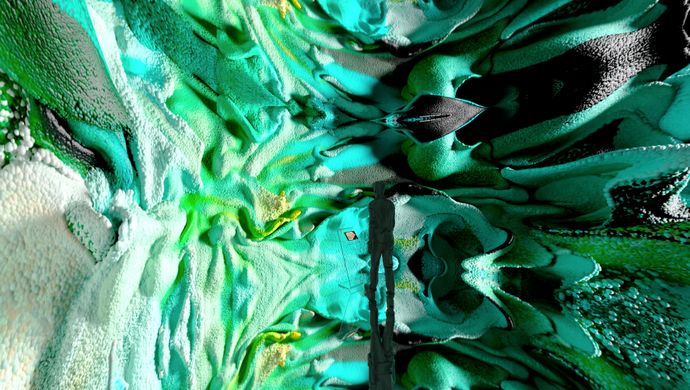
The second mode is the dream mode. Here, we teach the AI to “dream” about what it’s learned. Rather than presenting the dataset in a diagrammatic, navigable way, it generates a series of moving images that resemble artworks, flowing together in a more fluid, immersive experience.
What will audiences experience when they enter the space, and what do you hope they will take away from the experience?
When visitors enter, the first thing they encounter is actually the back of the LED wall - the “brain” supporting the installation. We see the hardware as much a part of the experience as the environment it runs.
From that physical entry point, audiences move to the software interface, where they can choose how they want to engage, whether that’s by navigating the dataset, or immersing themselves in the AI’s dream mode. They can select their own path through the work and decide how they interact with it.
Is there a particular moment, detail or way of engaging with the work that you'd encourage visitors to spend some time with?
I would encourage people to spend time navigating the dataset. It might look simple when watching others, but once you’re interacting with it, there’s a huge amount to explore – there are so many clusters to move through and connections to discover!
Take time with it, play with it, and follow what draws your attention - whether that’s a particular image or the relationships between them.
This work visualizes an archive. How do you think archive dreaming transforms the way we normally understand or experience archives?
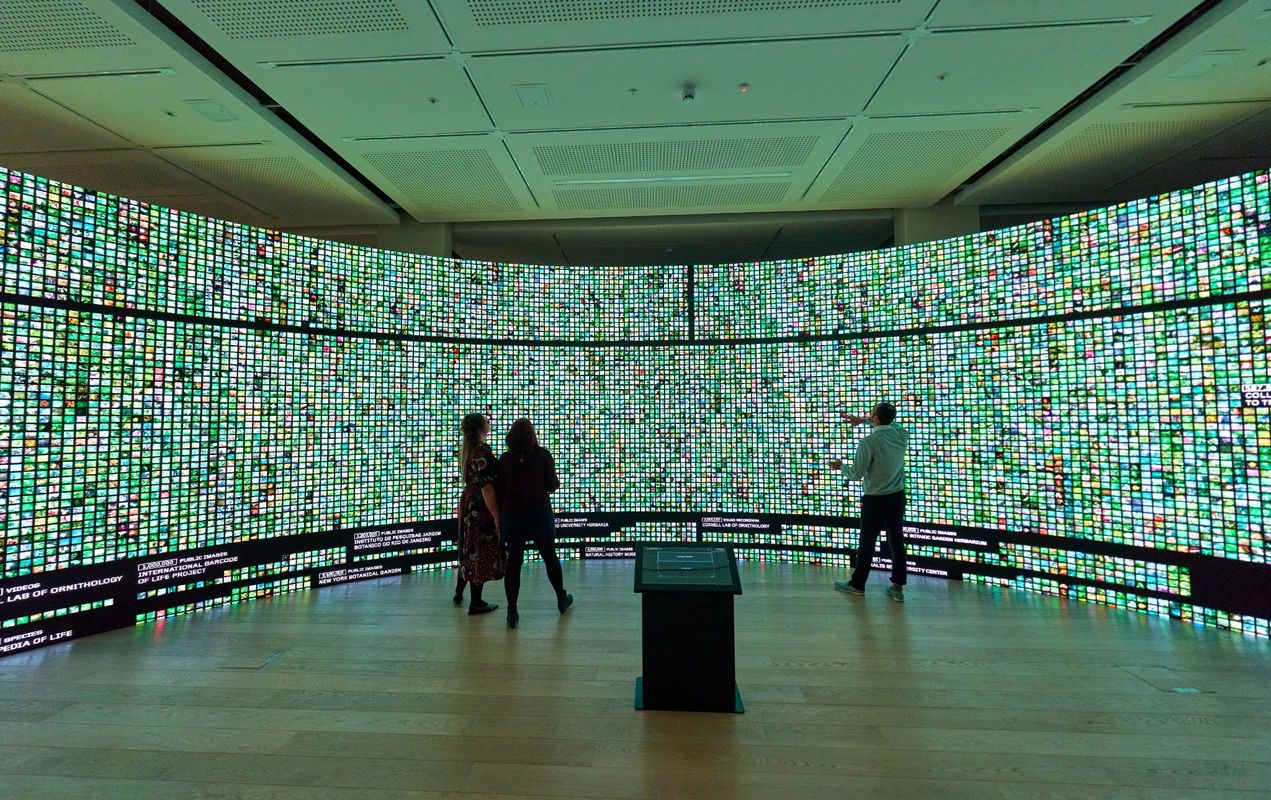
This is a personal one - I think everybody's experience of Archive Dreaming will be different. It brings an entire archive into a single, navigable space. You can zoom in and out, moving through thousands of images, which in a museum setting might be fixed to walls or displayed in cases.
That flexibility, and the ability to group and classify visually in real time, offers a powerful new way of thinking about archives, and thinking through the archive It also introduces unexpected perspectives - connections and relationships you might not anticipate.
There are around 350,000 images in this archive; we’re using 65,000 here. It’s rare to be able to see so much of an archive in one place.
Refik Andol is the first Lau Fellow in Creativity and AI at the University of Oxford. How has the relationship with the University of Oxford and the Schwarzman Centre influenced or shaped the project?
It’s been hugely influential. We were approached with a very open-ended brief, especially as this is the inaugural residency. The team has been incredibly open and supportive of what we wanted to do. A major part of the collaboration was identifying the right data sources, connecting with different departments, and engaging with the depth and history of research across the University.
Beyond that, it’s been about ongoing communication such as check-ins, on-site support, and a real sense of partnership. We feel very privileged to be part of this, and we’re looking forward to further engagement with academics in May.
Experience Refik Anadol: Archive Dreaming in the White Box at the Schwarzman Centre, open 10am - 5pm daily until 6 June.
Photos: David Levene